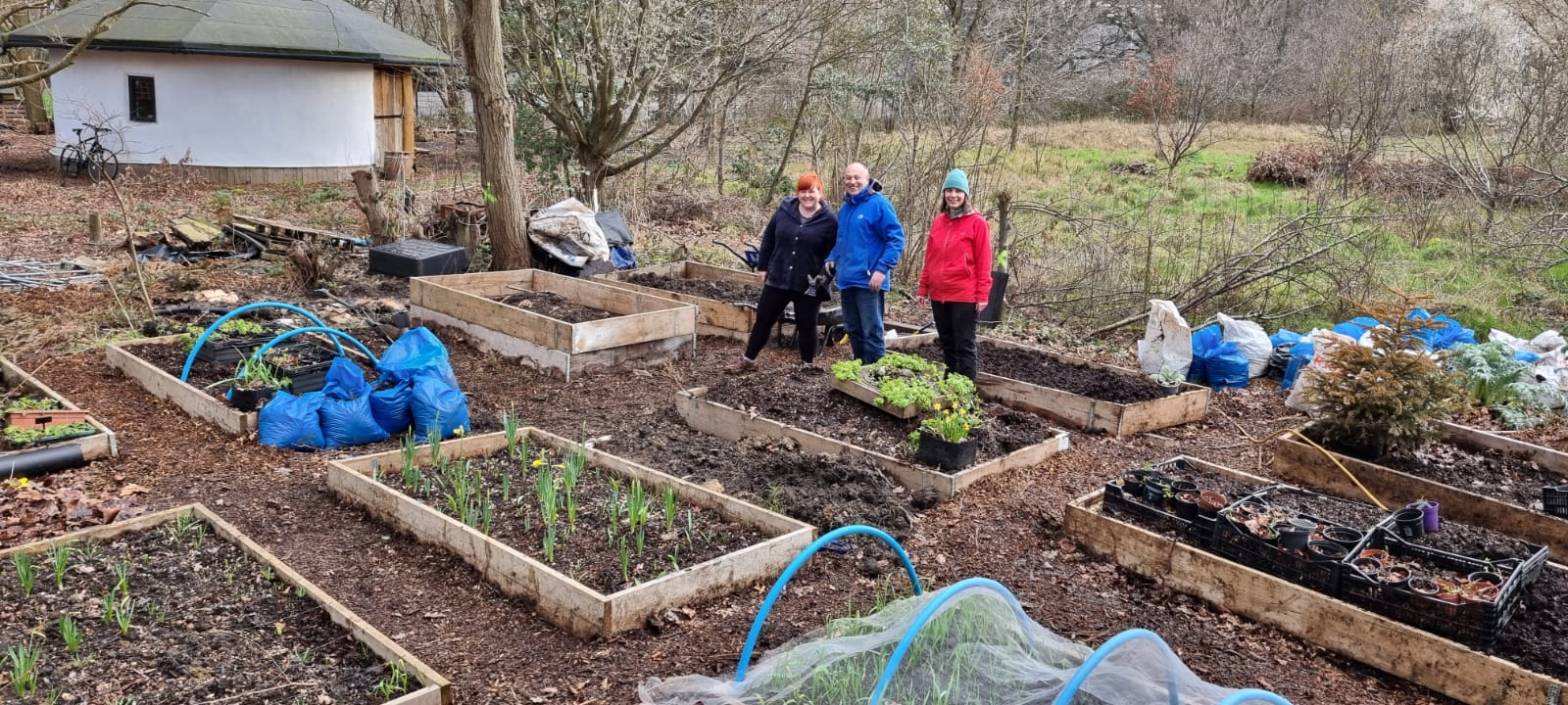
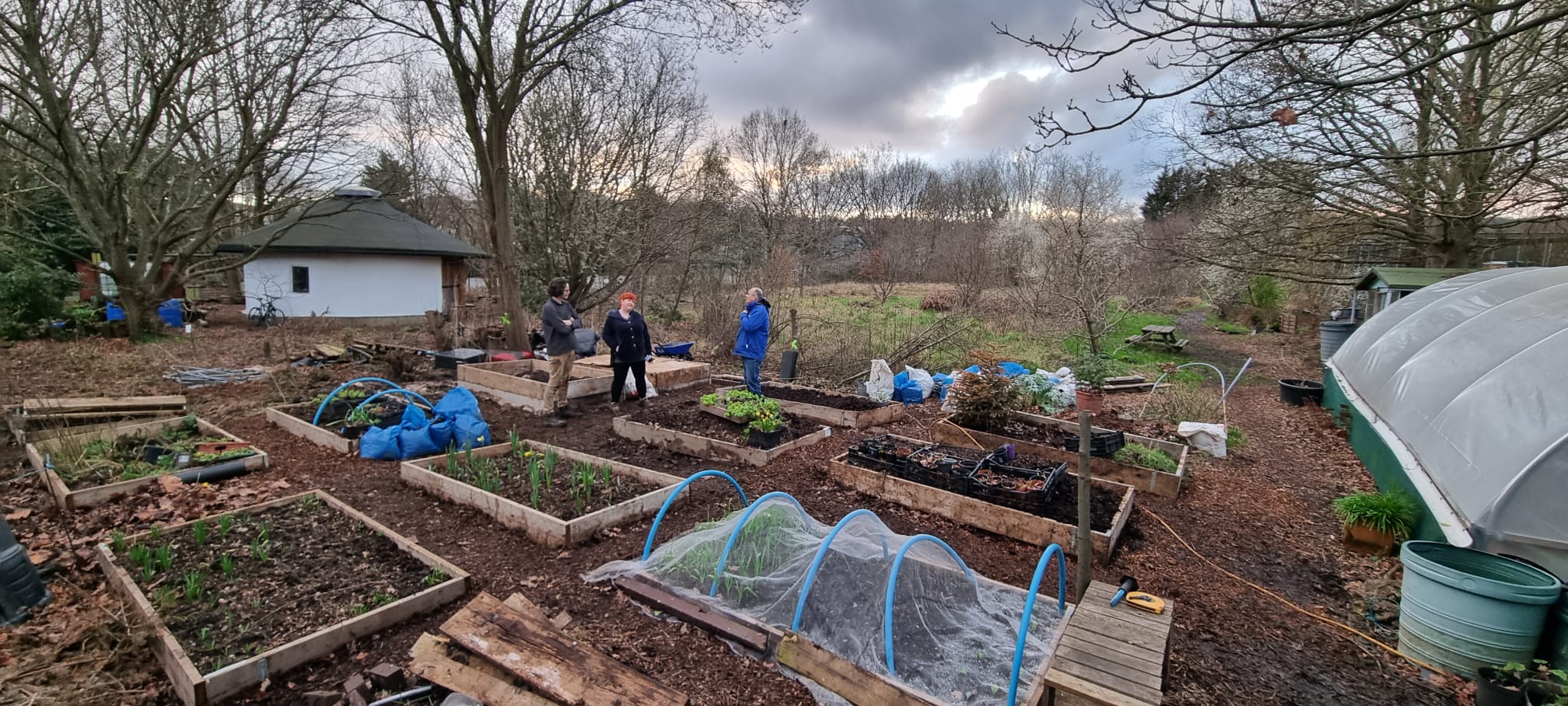
Work is really in progress at Meadow Orchard this winter! We are prepping our grow space, transforming our food growing area, carrying out seasonal coppicing in our small wood as well as continuing bramble clearance, hedge laying and scything in our meadow.
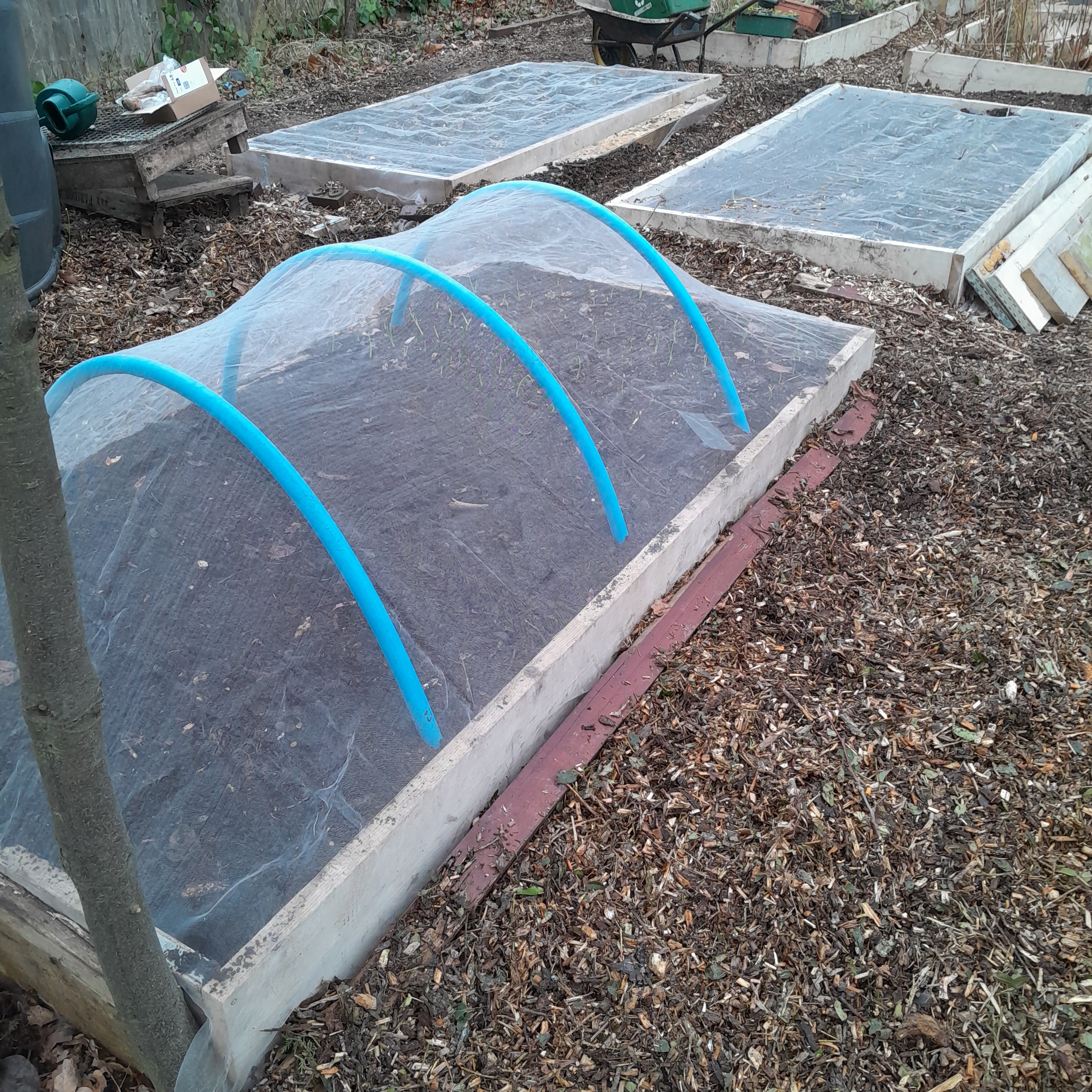
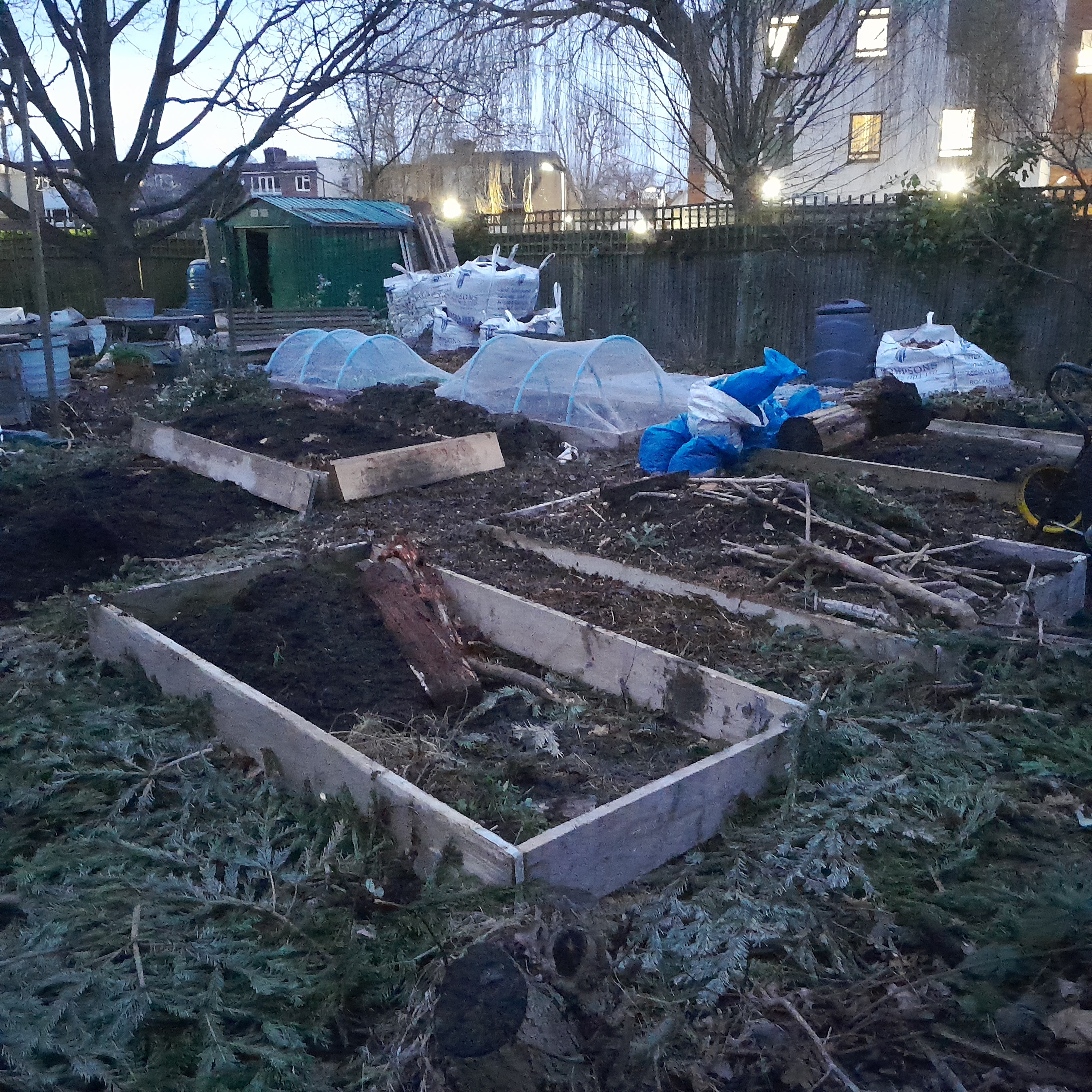
The old grow beds are being replaced with new semi-raised planters, made from sturdy reclaimed scaffold boards. The layout chosen for these beds was made through a meticulous planning process, including our members and consultations with our NHS friends at the health centre. Staff and site users, have really enjoyed visiting the site and we are so excited to be involved with such inspiring groups and charities through the Haringey Circle group and the Health Centre community cafe, amongst others. The grow space maximizes sunlight exposure in a corner while minimizing tree shade. Paths have been designed to facilitate easy access to the polytunnel and tool shed, creating a seamless flow around the beds and grouping the beds to maintain an inclusive, welcoming social space to grow together.
Several techniques have been employed in preparing the beds:
- Breaking up clinker to reduce soil compaction and enhance soil depth with organic matter.
- Digging over existing beds to remove persistent, perennial weed roots such as ground elder and bindweed
- Creating new paths around beds using corrugated cardboard to suppress weed and grass regrowth, topped with a deep woodchip mulch (sourced from local tree surgeons) to retain rainwater, reduce competition to food crops and minimize the need for maintaining grass paths.
- As part of our sustainability efforts, the woodchip used in pathways will eventually contribute to the grow beds as a top dressing to reduce the need for additional rainwater and enhance soil structure.
To create fertile beds for both perennial and annual crops and really kick start this years growing, eight dumpy bags of compost, soil conditioner, and heavy horse manure have been ordered and combined with existing soil. Vermicompost, worm castings, leaf mold, and onsite-made compost have further enriched the mix. Additionally, we’ll be incorporating brewery waste from a local brewery, spent grain (malt), hops, and brewers yeast, mixed with arborists woodchip to balance carbon and nitrogenous materials. This will be added as a top dressing along with vertical mulching as it becomes available to use from our composting bins and bays.
Two of the beds have already been prepared and planted with spring bulbs, (generously provided by Haringay Parks department). Volunteers and visitors have delighted in witnessing the first signs of life, including tulips, wild and cultivated daffodils, fritillaries, and native English bluebells. We can’t wait to see the colour in the spring.
Beyond planting flower bulbs, garlic sets are in the ground along with more wild garlic, first early potatoes are chitting, prior to planting, and there are seed onions to sow, broad beans to plant out as the weather improves.
Future plans for the beds involve incorporating hugelkulture, lasagna gardening, biochar, inoculated compost teas, and indigenous microorganisms to provide an optimal start for the upcoming planting season.
Despite wintry conditions, volunteering days have seen a fantastic turnout with new members falling in love with the site’s creativity, energy, and possibilities. Harvesting the lightroot bed has been a rewarding experience, and we look forward to replanting in spring. Volunteers have also been hard at work clearing brambles from the meadow and coppicing our stands of multi-stem oaks, using the woody organic matter to create a large dead hedge that provides habitat for amphibians and insect life during winter.





 Meadow Orchard Project
You must be logged in to post a comment.