
We use organic matter from a number of local waste streams to produce compost and mulch for our food growing ‘Kitchen Garden’ and Orchard.
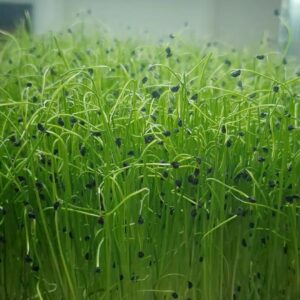
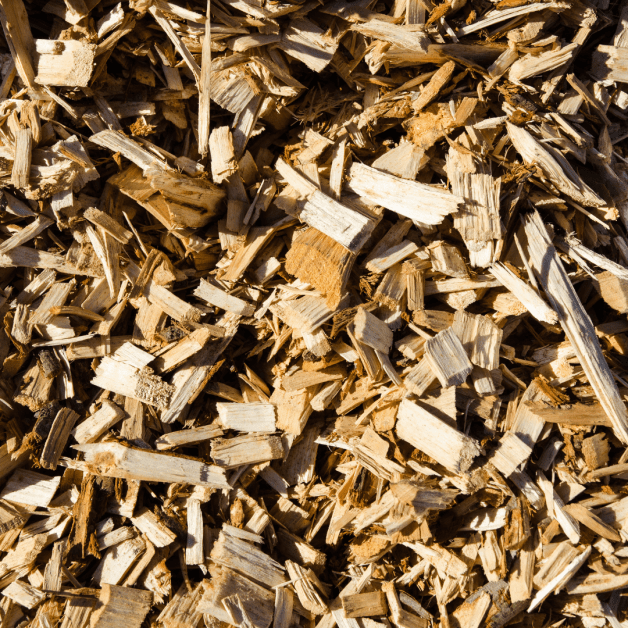
We have offered to compost the spent brewery grain, hops and yeast from the nearby Muswell Hillbillies brewery, waste micro greens substrate from Tasty Micros, arborists woodchip from Forbes Tree Surgeons, waste sawdust, hardwood and offcut timber waste from a woodworking shop, as well as our volunteers and visitors dropping off kitchen waste to compost on site.

Composting methods
We use a number of methods to compost material at MOP, depending on the application. Trench composting is used when preparing beds, simply adding layers of material where they will break down over the winter in newly created beds. Elsewhere a combination of Hügelkultur and Lasagne gardening is used, burying large logs along with twiggy materials and layering in green leafy waste in order to add nitrogen. Chop and drop is also used to compost green leafy waste, directly in the beds. Green manure cover crops are also grown, such as beans, clover and alfalfa. These are overwintering crops, purely grown to maintain soils, prevent nutrient run off and protect soil structure. In the spring these are harvested and used as a mulch on the beds, ahead of planting.


Soil feeding stations and wormeries
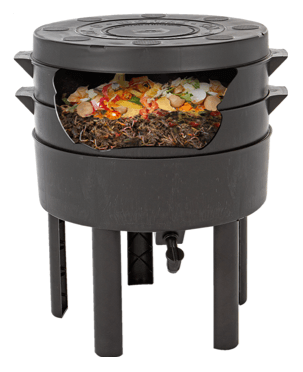
We have a number of small Can-o-worms type wormeries, these offer a small domestic sized wormery which offer a good visual demonstration of the vermicomposting process. We also use repurposed containers buried in the grow beds to offer a vertical mulching technique where material is added alongside heavy feeding plants, such as Squash and Pumpkin.
Hot Composting or Batch Composting
When we have a large volume of waste to compost at once, we use a number of ‘Dalek’ or Blackwall 330 L Compost Converter bins. These were sourced locally using the nextdoor app. This design is often provided with a subsidy from the local council. Alternating layers of green waste, high in nitrogen is added alongside carbon rich, materials such as brown leaves, woodchip etc. In the case of arborists woodchip, depending on the tree being in leaf or dormant, can have a variable content of green leaves too. We aim for a ratio of around 30:1, or 30 parts carbons to 1 part nitrogen.
The resulting large volume of material from adding materials in bulk to a bin in one batch results in the composting bacteria and microbes to produce a lot of heat, mesophilic bacteria raise the temperature to around 40 degrees Celsius at which point thermophilic bacteria take over and the temperature increases to around 60 degrees Celsius. It is said that for every 10 degrees above ambient temperature the composting process halves in time. This is particularly apparent in winter, where a cold compost bin will not produce sufficient heat and the soil microbes and bacteria will be largely dormant.
As the materials compost the volume quickly reduces as the material breaks down and the airspaces are filled up. A small compost aerator tool is used to help mix materials in the bin, a compost thermometer is also available to use on site and this is a good indicator of how active the heap is. Once the temperature has reduced to around 30 degrees Celsius the bin can be emptied into a conventional heap or wormery to mature.


Hügelkultur
Hügelkultur is a gardening method that involves creating raised garden beds using decomposing wood and other organic materials. The word “hügelkultur” comes from the German words hügel (meaning hill) and kultur (meaning culture or cultivation), essentially meaning “hill culture.”


 Meadow Orchard Project
You must be logged in to post a comment.