
- Project #1 One Plank Birdbox
- Project #2 One Plank Batbox
- Project #3 Two Drum Biochar Retort
- Project #4 Pinecar Derby Racers
- Project #5 MOP Colouring 1
- Project #6 MOP Colouring 2
- Project #7 Build a Bee
- Project #8 Portable Pole Lathe
- Project #9 16 Brick Rocket Stove
- Project #10 Observation Bee Block
- Project #11 Kids Corner – Nature Quiz
This page details some of the projects our volunteers have made at MOP. If you enjoyed downloading any of these plans and making the projects, please use the donation link at the bottom of the page to help support Meadow Orchard Project!
If you make any of the projects, please send a photo to meadoworchardproject@gmail.com
Welcome to the MOP Projects page! Here, you’ll find a collection of exciting and creative projects made by our talented volunteers at Meadow Orchard Project (MOP). These projects range from birdboxes and batboxes to biochar retorts, portable pole lathes, and fun activities like the Pinecar Derby Racers. If you’ve enjoyed building any of these projects, we encourage you to make a donation to support the ongoing efforts of MOP. Your contributions help us continue to create meaningful work for our community and the environment.
Feel free to download our plans, get crafting, and share your finished projects with us at meadoworchardproject@gmail.com. Whether you’re creating a simple birdbox or learning new woodworking skills with our green woodworking projects, there’s something for everyone. By contributing to MOP, you’re supporting not only our educational programmes but also our commitment to sustainability and conservation.
Project #1
One Plank Birdbox
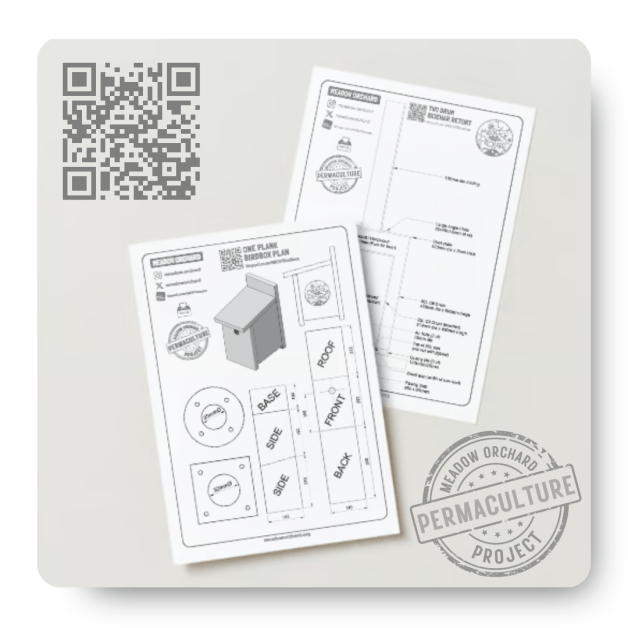
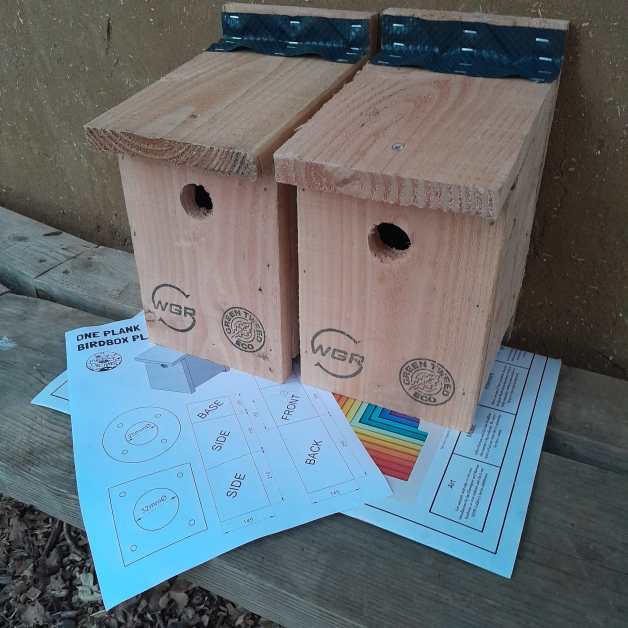
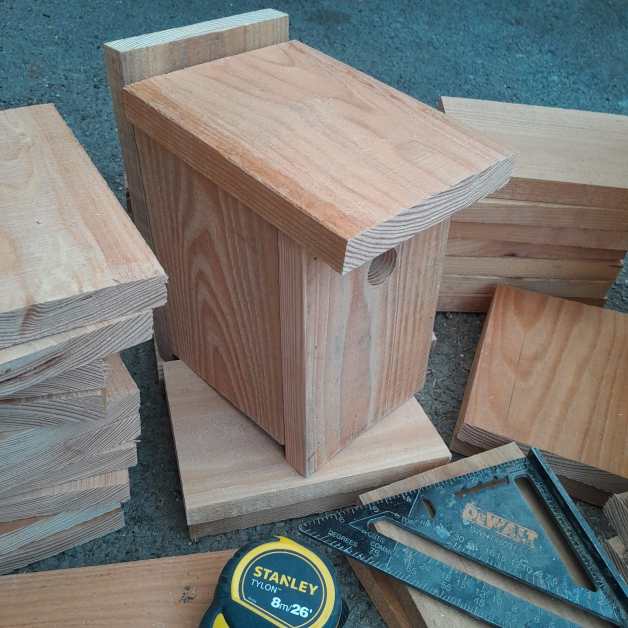
The link above is for a small birdbox suitable for Blue tits or Great tits. All of the pieces can be cut from a single 1.2m or 4ft length of wood. The back of the box can be the offcut after cutting the other pieces. Ideally use 18mm or 3/4″ timber. Untreated softwood is ideal for this project. You can be as creative as you like adding a roof covering. A piece of roofing felt tacked onto the roof piece will help protect the box and it’s occupants too.
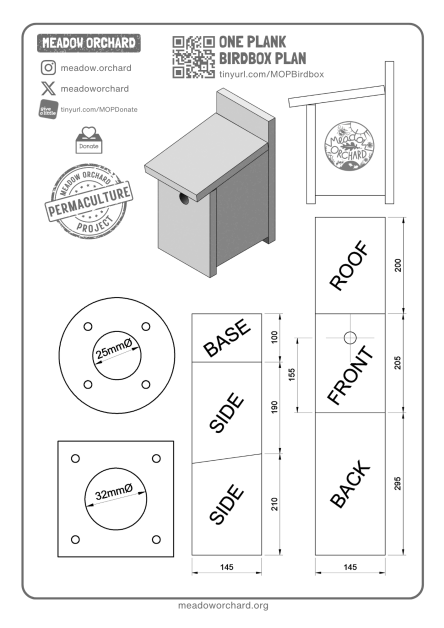
You can use a piece of damp proof membrane to make a hinge for the lid, a hinge or just screw the roof down. Please make sure to leave the box during the nesting season (March to August). The box can be assembled using nails, screws will ensure a longer life. The plans include a template for a metal hole protector. These can be made from scrap sheet metal or use a commercially made item (please make sure that there are no sharp edges or burrs around the opening).
Project #2
One Plank Batbox
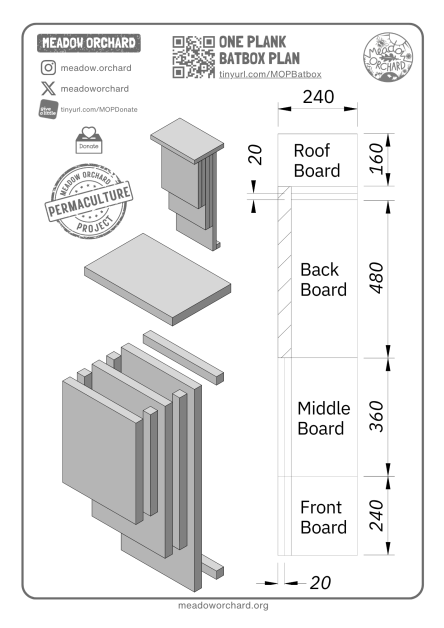
The Batbox above is based on the design by the Kent Bat Group. The box can simply be made from a single length of softwood approx 1.5m long, 240mm wide and 20mm (3/4 of an inch) thick. Sawn timber is best as it provides a rough surface for the bats to grip on to. The wood should be untreated and left unfinished, without preservative or paint.
The spacers in between the boards can be cut from the edge of the board and should measure between 15mm and 25mm to give sufficient space for the bats to roost in between the boards.
Fix the box as high as possible, in a wind free, sheltered position. Ensure the box gets some sunlight during the day. There should be a clear flightpath for the bats to fly in and out of the box.
Please remember, bats are a protected species, do not attempt to inspect or disturb the box if you suspect bats are using the box. Instead, look for traces of bat droppings underneath the box!
Project #3
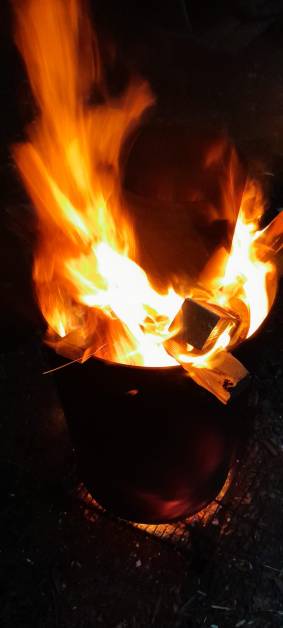
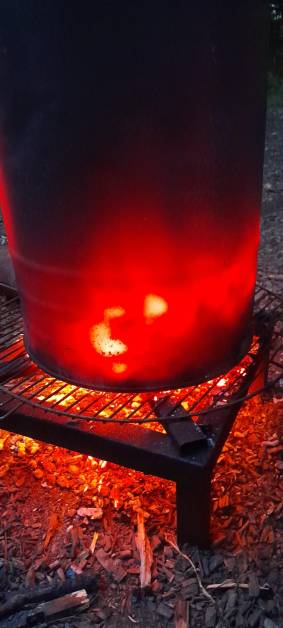
Two Drum Biochar Retort
We use scrap wood and biomass from the Meadow Orchard site to produce Biochar. Biochar is a soil amendment and is particularly good at helping to bring back soil life in the very sparse topsoil and heavily compacted clay that we have at MOP.
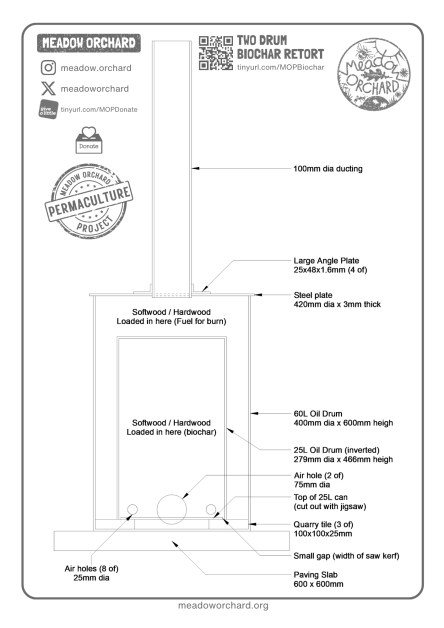
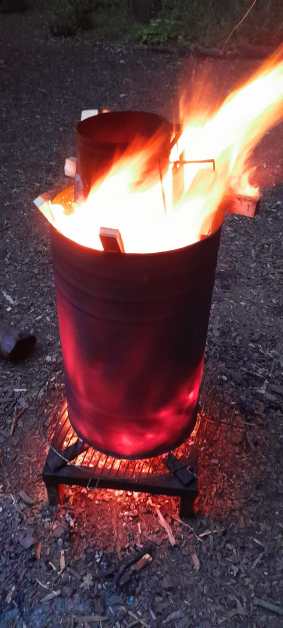
The retort is built from empty oil drums (one 60l and one 25l) please check what was stored in the drums before cutting these and dispose of any contents responsibly.
Project #4
Pinecar Derby Racers
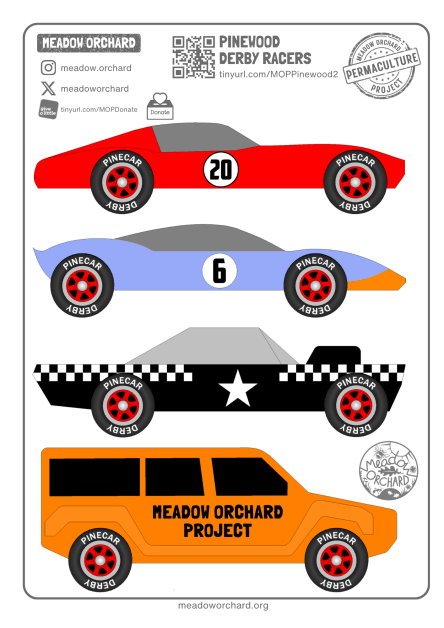
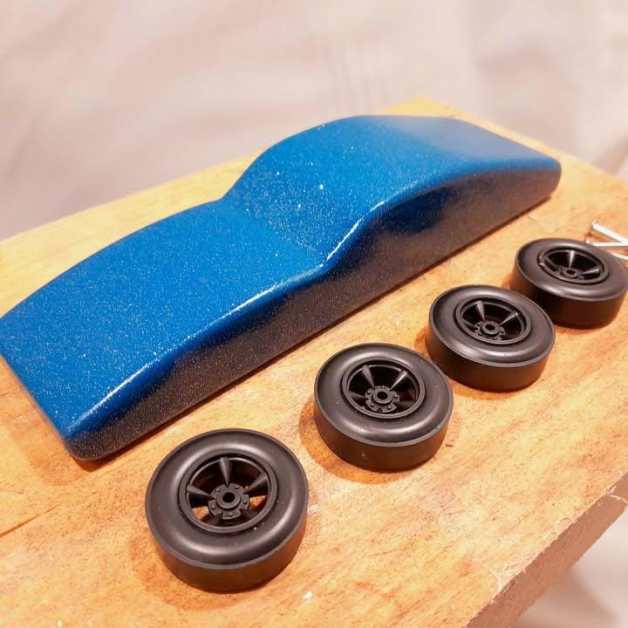
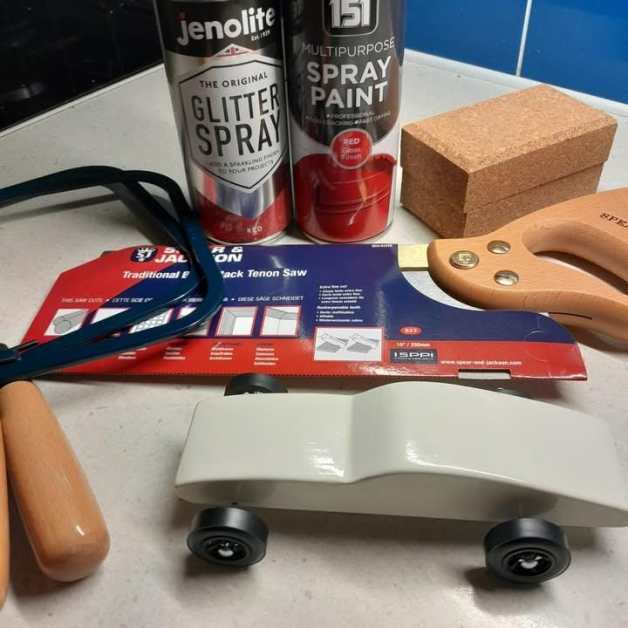
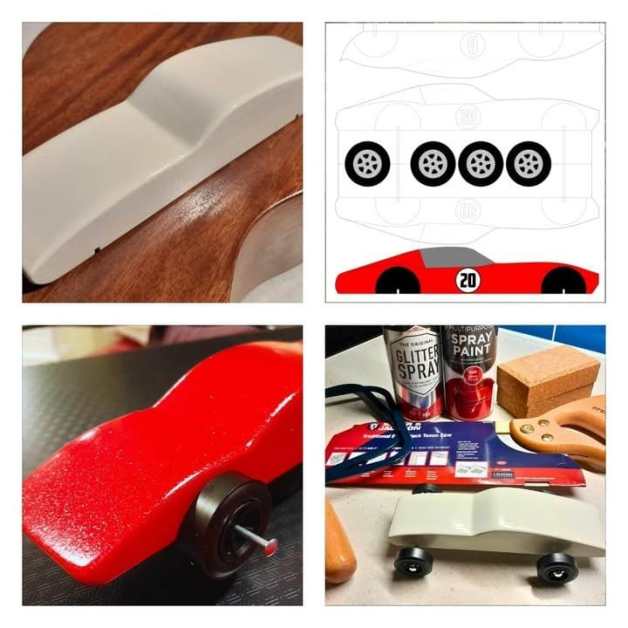
Pinewood Derby Cars are a terrific woodworking project for children of all ages. The profile of a toy car is drawn onto a block of softwood and the shape cut out. A tenon saw, coping saw or bandsaw can be used to carefully cut out the shape. The design can be refined with rasps, spoke-shaves and glass-paper to create a smooth and streamlined model car.
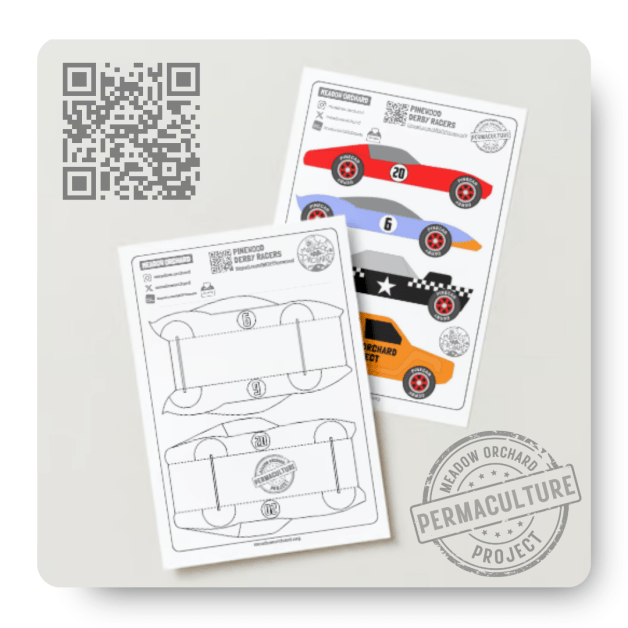
Commercially made super free running wheels can be purchased or for a static model, simple wooden discs or wooden toy wheels used. Finish the car with sanding sealer, apply filler to any voids, sand, prime and paint, or simply varnish to show off the fact that it’s made from wood!

Project #5
MOP Colouring 1
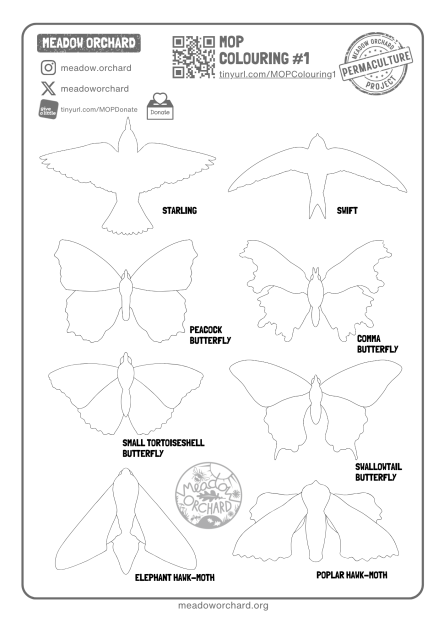
Print the below design and colour in the creatures! What other butterflies and moths can you think of? Do you know where Elephant Hawk moth get their name from and why is a Peacock butterfly called a Peacock?
Project #6
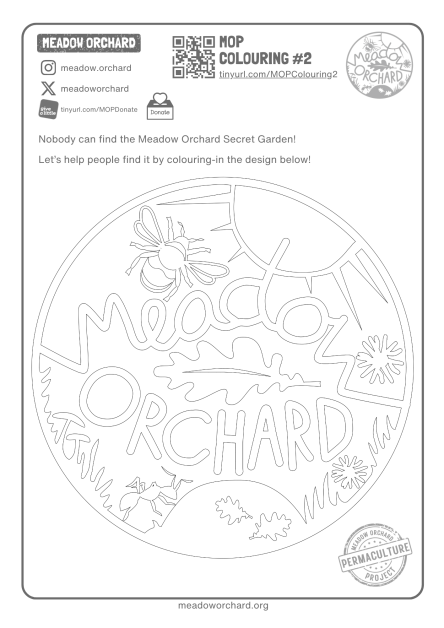
MOP Colouring 2
Meadow Orchard Secret Garden is very hard to find!
If you colour in the lovely logo design below, we might be able to make it into a lovely sign so people can discover the secret garden! Would the garden still be secret if people could find it though?
Project #7
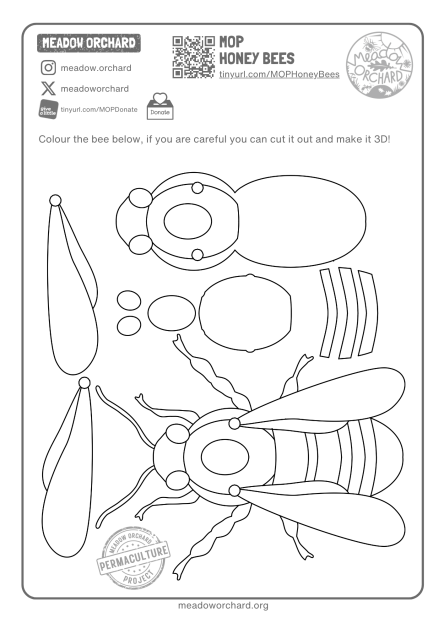
Build a Bee
Carefully colour the design below, felt pens or colouring pencils are ideal. If you stick the design onto card you can cut-out the pieces and make it look 3D, pipe-cleaners are good for legs, but what other things could you use? Can you name the different parts of the bee? How many eyes does a bee have?
Project #8
Portable Pole Lathe
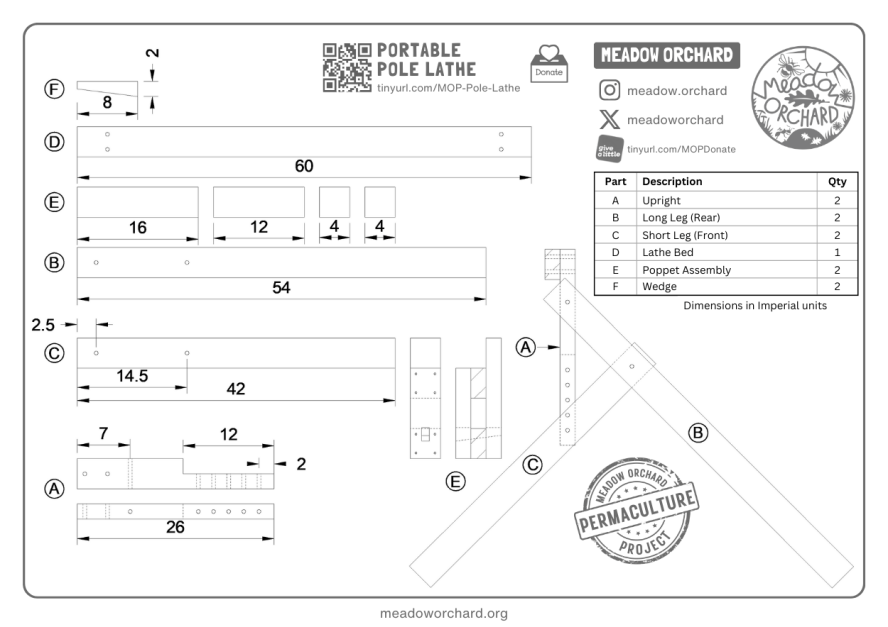
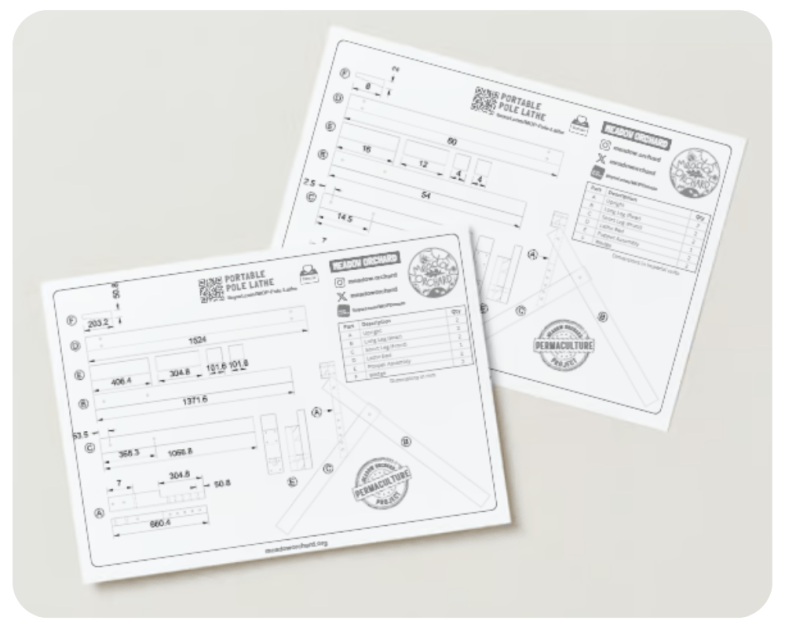
This plan is for a simple treadle powered wood turning lathe or Pole / Bungee Lathe. This lathe can be simply made from 100x50mm (4×2″) softwood joinery timber. The design provides a low cost introduction into off-grid wood turning. The design is based on the lathe shown in Harry Rogers’ video here: https://www.youtube.com/watch?v=Nc3GqpCIDqk&list=WL credit to Harry Rogers and Mike Abbot.
Project #9
16 Brick Rocket Stove
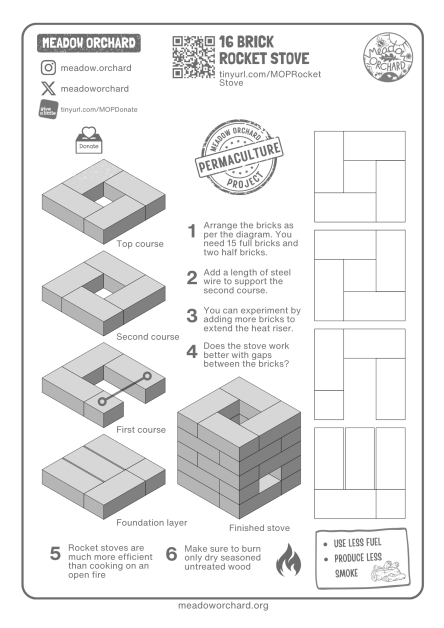
This is a plan for a very simple Rocket Stove. You can use reclaimed bricks, new house bricks or concrete block pavers. The dimensions aren’t critical but it’s best to stick with bricks that are all the same size and height (old Imperial bricks and modern metric sized ones are different. There’s no need to use cement mortar to fix the bricks together. You can use clay between the bricks or try leaving some small gaps to see what works best.
If you have an old oven shelf or baking cooling rack, you can add a simple grate. If you build the foundation layer as per the first course as shown above and then place mesh in between the foundation layer and first course, the ash can then easily be raked out during use.
A pan rest can be something as simple as three stones placed on top of the stove, some bits of quarry tile or a salvaged pan stand from an old gas hob or broken camping stove.
A rocket stove works by using a highly efficient combustion process. It has a vertical combustion chamber (or heat riser) where wood or fuel is burned, and the hot gases (smoke) are channelled upwards and burnt. This results in less smoke polluting the atmosphere, higher efficiency, and a very hot cooking surface, making it ideal for outdoor cooking or heating.
As with all open fires, the stove should be used with care and the same precautions used as an open campfire. Be especially careful with children, animals and pets and always have a bucket of water and some good chrome leather gauntlets nearby.
Project #10
Observation Bee Block
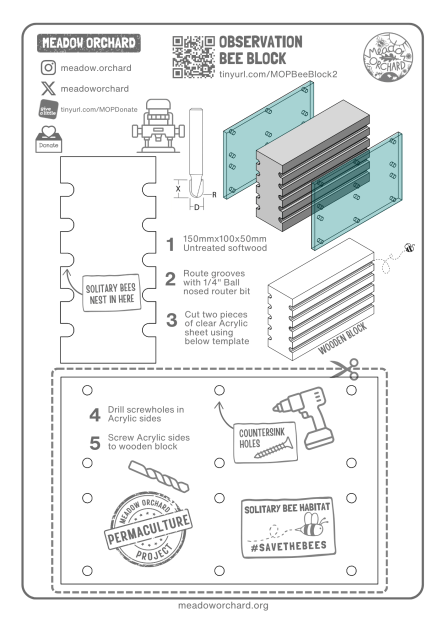
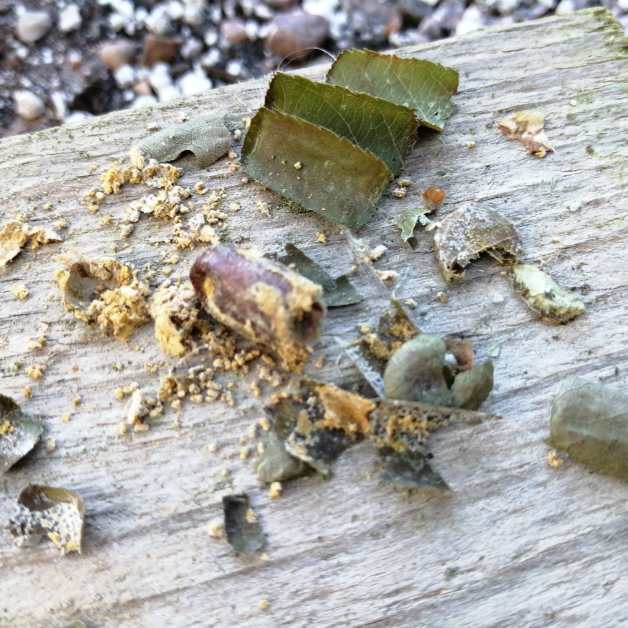
This is a plan for making a Bee Block for solitary bees to nest in. Often to make habitat for solitary bees, holes are drilled into a tree round, post of wooden block. This design is different as it rather than drilling holes, grooves are routed into the sides of the block and clear Acrylic side ‘windows’ are fitted to the sides.
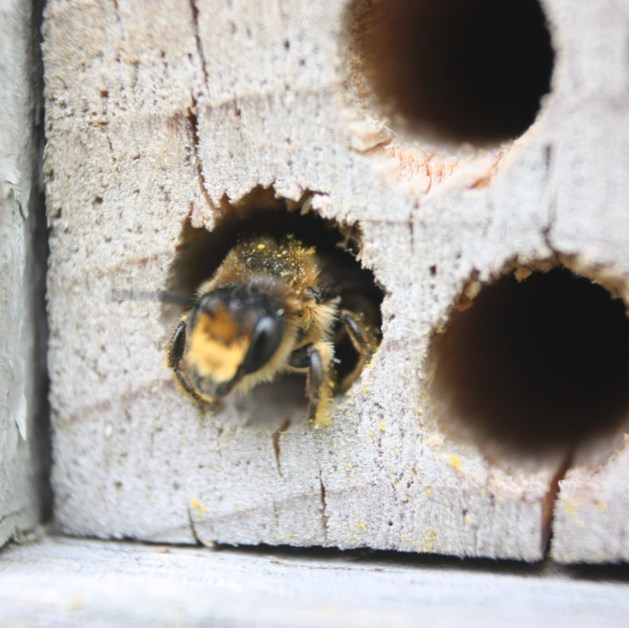
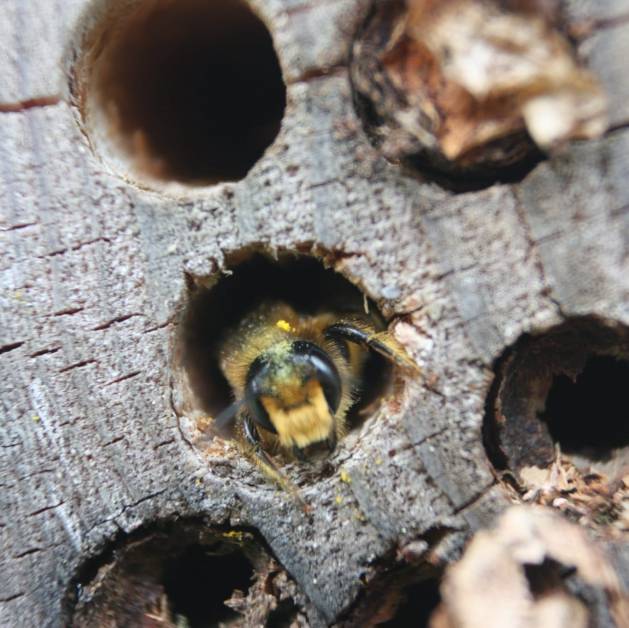
The 1/4″ or 6.35mm router cutter produces the ideal hole size for Red Mason Bees. Red Mason Bees are widespread in the UK and will swiftly take up residence in Beehouses or ‘Bee Hotels’.
Mason bees are a solitary bee, solitary bees unlike honey bees do not overwinter as a colony in a hive. The female mason bee lays eggs in individual nest chambers, the bee then overwinters as a larvae, pupating and emerging as an adult the following spring.
Project #11
Kids Corner – Nature Quiz
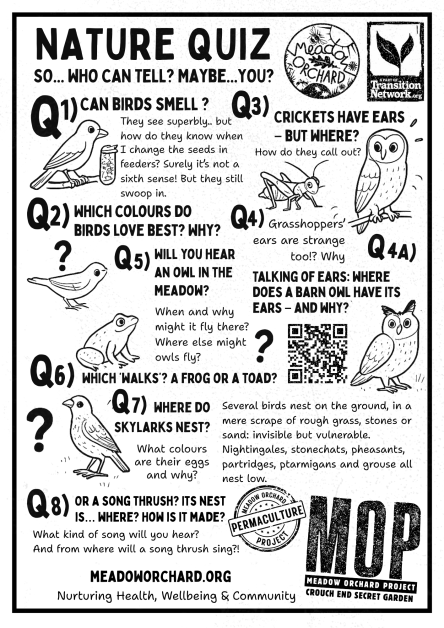
Download our Kids Corner Nature Quiz!
If you use any of these activity sheets please make a donation to Meadow Orchard. Suggested Donation £1, with all proceeds helping to support The Meadow Orchard Project
Join us in making a difference and bring the Meadow Orchard Project’s vision to life. Your support goes a long way!
Charity verified by Give A Little. GDPR, PCI & PCI-DSS Compliant Point of Donation.


 Meadow Orchard Project
You must be logged in to post a comment.