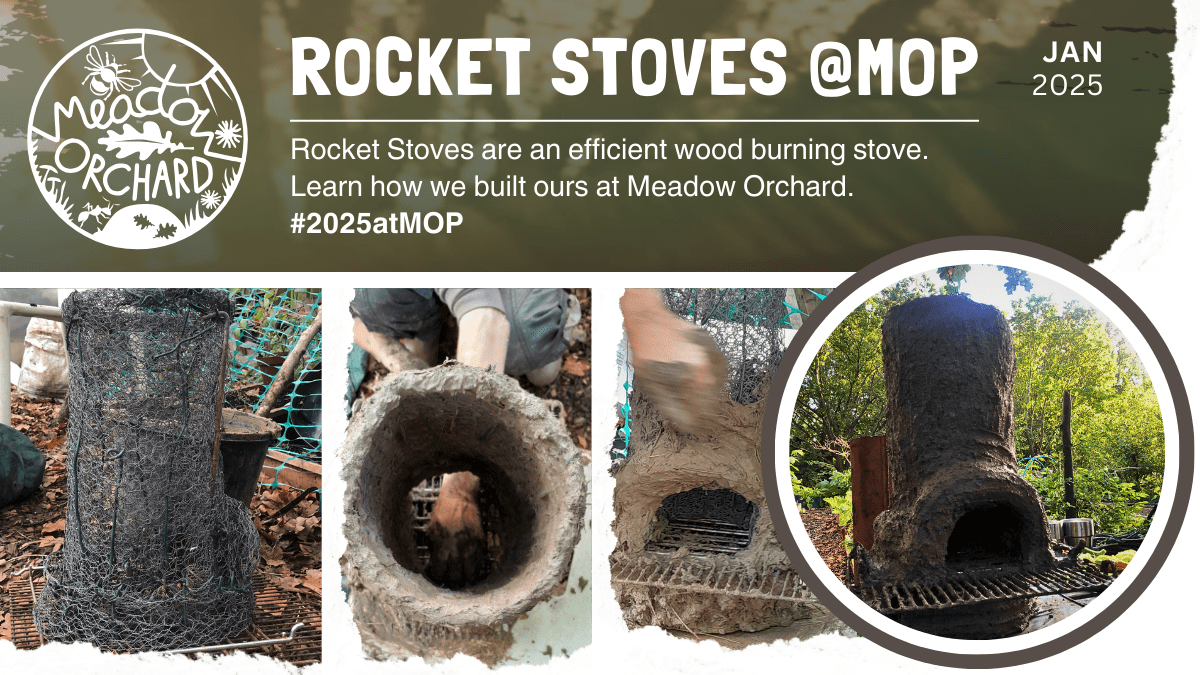
A Rocket Stove is an extremely efficient and clean-burning wood stove. It utilizes a tall flue or heat riser that generates a strong draft, ensuring that most of the wood gas, smoke, and particulate matter produced during combustion are burned within the chimney or heat riser itself. The stoves can also be built from a material which helps insulate or operate as a thermal mass to help retain heat for extra radiant warmth too.
Because of the efficient combustion process inside the stove, almost complete combustion of the feedstock occurs, resulting in less ash, less smoke, greenhouse gas emissions and a greatly reduced fuel consumption.
Unlike an open fire, where significant amounts of airborne fine particulate matter are produced (PM2.5, particles less than 2.5 micrometers in diameter), a Rocket Stove minimizes this issue. PM2.5 can pose serious health risks, particularly for children, elderly and those with respiratory conditions.


A rocket stove works by efficiently burning fuel in a way that maximizes heat output while minimizing smoke and fuel consumption. Here’s how it works, step-by-step:
- Fuel Placement: The stove is designed with a vertical combustion chamber where small pieces of wood, sticks, or other biomass fuel are placed. The fuel is typically arranged in a way that allows for good airflow, causing a vortex inside the heat riser which helps the fire burn more efficiently.
- Airflow and Combustion: Often rocket stove’s utilise a J-shaped combustion chamber. The fuel stock is lit at the bottom of the stove in a burn chamber, the design of the stove encourages the fire to burn upward through a chimney-like structure. This shape creates a powerful updraft that helps ensure the fire burns hotter and more completely.
- Insulated Chamber: The combustion chamber of a rocket stove is often insulated with materials such as rockwool, wool, biochar or high-temperature-resistant substances such as Cob or clay. This insulation helps to retain heat in the stove, which increases the temperature inside the chamber, promoting more complete combustion of the fuel.
- Secondary Combustion: In many rocket stoves, the hot gases that escape the initial combustion process are directed into a secondary chamber where they are burned a second time. This secondary combustion reduces the amount of smoke produced and increases the stove’s efficiency.
- Heat Transfer: The rocket stove typically has a flat cooking surface, like a pot or pan, placed directly on top of the stove. The hot gases from the combustion chamber rise and pass around the pot, transferring heat directly to the cooking vessel. This process maximizes heat transfer to the food while minimizing heat loss.
- Efficiency: Because the rocket stove creates a hot, clean, and efficient burn, it uses much less fuel than traditional open fires or inefficient stoves. The design also directs the heat upward toward the cooking vessel, rather than dispersing it in all directions.
In summary, the rocket stove works by creating an upward flow of air in a highly insulated combustion chamber, which burns fuel at a higher temperature and with greater efficiency, producing less smoke and using less fuel. The heat is then directed toward the cooking surface for optimal energy transfer.
 Meadow Orchard Project
You must be logged in to post a comment.