Organic gardening
At Meadow Orchard we try to practice organic growing, relying on complex natural ecosystems, working with nature to maintain healthy and fertile soil.
Mycelium Networks
Paths at Meadow Orchard are mulched with waste organic matter, branches and a deep layer of woodchip. These paths create drainage, help retain moisture and provide support a huge diversity of soil life. Regular mulching with organic matter prevents soil erosion mimics the natural cycles of autum leaf-fall, providing a blanket to protect the complex systems and symbiotic organisms such as bacteria, fungi and larger detritovores such as ground beetles, rove beetles, stag beetles and worms. Woodchip paths help to create a kind of mycelium network, transporting nutrients around the site and supporting our mature trees.
Leave the Leaves
Each year leaflitter from our mature trees is left on the soil to provide shelter and habitat for soil organisms, beetles and rodents. Over time in a natural ecosystem the lifecycle of pioneering species of plants, and short lived trees such as Rowan and Birch, grow, die and over decades build the soil structure to support a succession climax trees such as Oak.
Jelly Fungus and hairy curtains
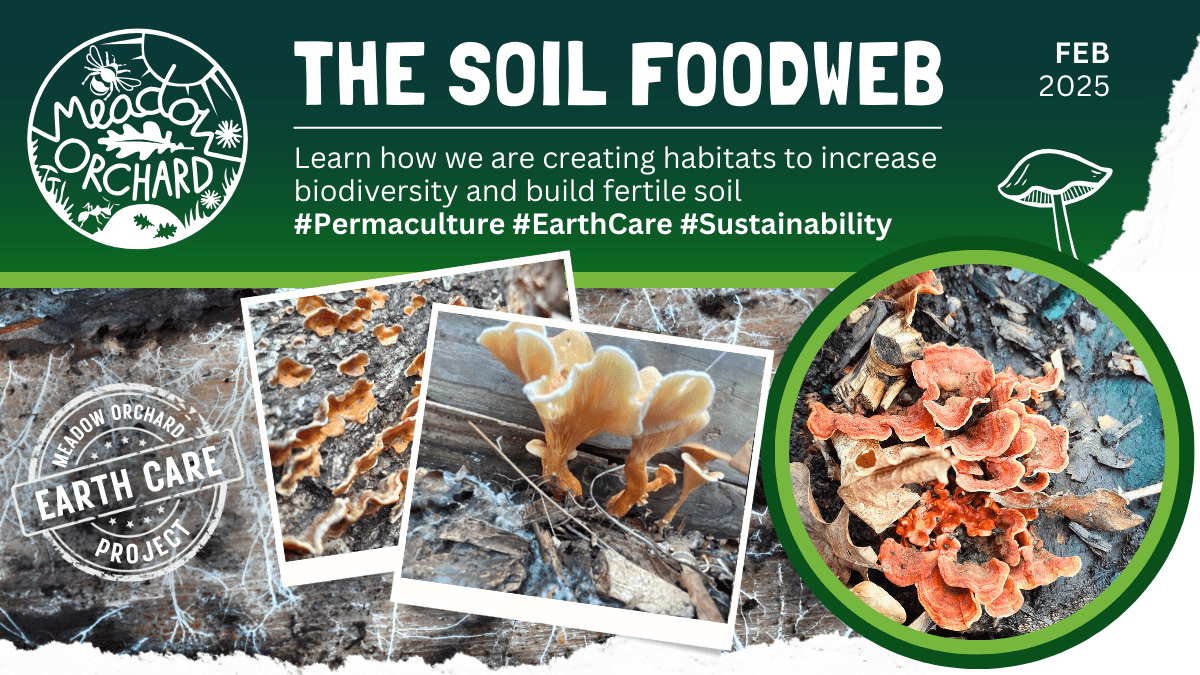
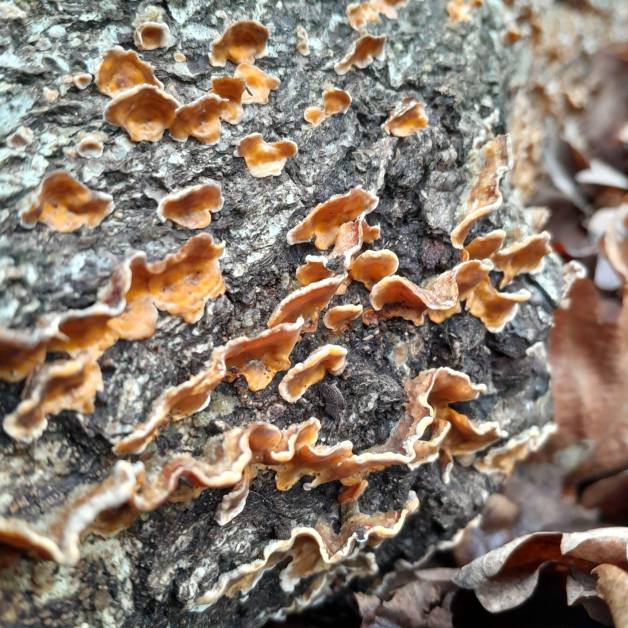
At Meadow Orchard there is a good diversity of fungi, such as False Turkey Tails or Hairy Curtain Fungus, slime moulds such as the rather unattractively named Dogs Vomit Slime Mould and jelly fungus such as Wood Ears. It’s always fun to see the fruiting bodies of these rather alien looking structures appearing over the winter and spring. It’s also a good indicator of healthy soils along with a good population of surface dwelling Dendrobaena (epigeic worms) composting worms and earth worms (anecic worms) such as Lob worms. The different species of worms maintain passages through the soil with their burrows to improve soil aeration and drainage.


Symbiosis
The soil food web is a complex network of symbiotic organisms in the soil that interact with each other and with the soil environment, breaking down organic matter and recycling nutrients and minerals. At the base of the web are microorganisms such as bacteria and fungi, which decompose plant and animal matter. These microbes then form the foundation for a variety of higher organisms, including, nematodes, earthworms, and arthropods, each playing a vital role in nutrient cycling and remineralisation.
By supporting the organisms at the base of the food web, this in turn helps to support a diverse range of species, such as Green Woodpeckers that feed on the larvae of our Yellow Meadow Ants and ground feeding birds such as Robins, Dunnocks, Blackbirds, Thrushes and Jays that feed on worms and in turn help maintain a natural balance.
Along with worms and beetles, slugs also perform a valuable role in this ecosystem. Slugs will often favour decomposing plant matter so we practice chop and drop, leaving waste material on the soil surface where it will decompose naturally.
In the soil food web, each organism has a specific role:
- Microorganisms (bacteria, fungi): Break down organic matter and make nutrients available to plants.
- Nematodes: Some feed on fungi, others on bacteria, and some are predators, controlling pest populations.
- Worms: Consume organic material and break it down further, enhancing soil structure and aeration.
- Arthropods (e.g., ants, beetles): These detrivores feed on organic matter in soil and also serve as prey for other organisms.
Together, these organisms create a complex, balanced ecosystem in the soil, helping to maintain soil fertility and plant health. The soil food web is critical for organic growing, sustainable agriculture, and improving, building and retaining soil and soil quality over time.
 Meadow Orchard Project
You must be logged in to post a comment.