
- Cooking on open fires
- Planning a fire at MOP?
- Lighting a fire
- Heat and Its Role in Combustion
- Fuel’s Role in Combustion
- Oxygen’s Role in Combustion
- Sustaining a fire
- Precautions
Cooking on open fires
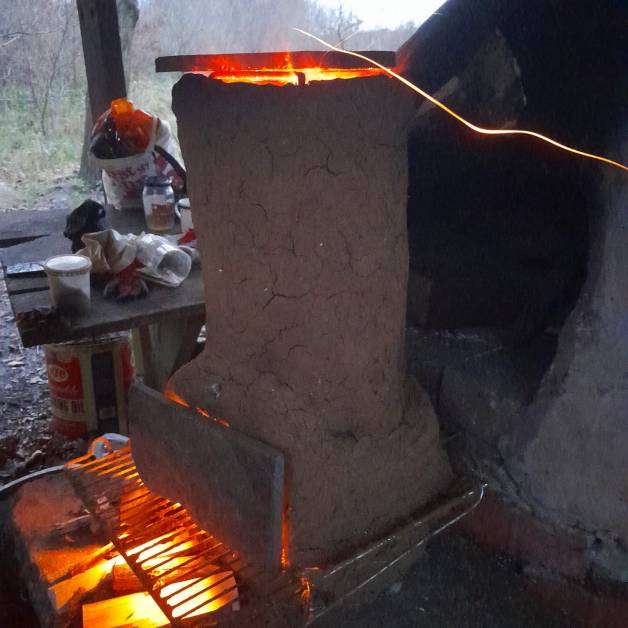
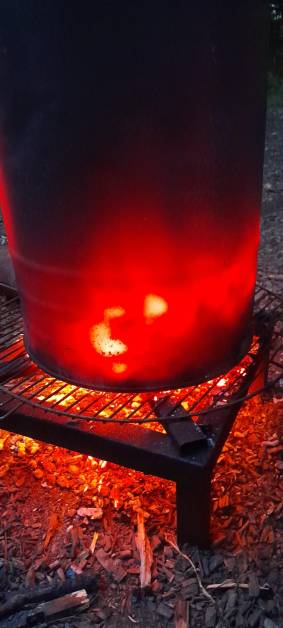
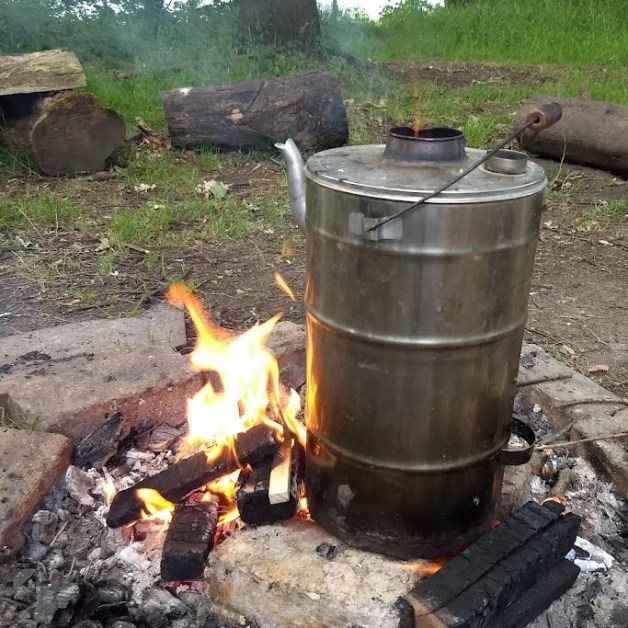
Meadow Orchard site is off-grid, which means we don’t have mains gas or electricity. To cook at Meadow Orchard we use bottled gas (Butane or Butane / Propane mixed gas), Paraffin, Meths or Firewood. We have a number of different types of stoves and methods of cooking, Kelly Kettles, Rocket Stoves, Gasifying wood stoves, Bio-char stoves, paraffin stoves amongst others! You are probably realising about now that we love stoves.
Planning a fire at MOP?
If you would like to use our fire circle, have an open fire or use our stoves, please ask one of our site leaders for an induction or email us and we’ll be able to show you how to light and sustain the fire. They’ll also be able to show you were we keep the required tools along with any precautions and safety measures. They can also send a copy of our fire policy which details what can be burnt in the fire pit and a few important common sense risk control measures. It’s also important that your group has third party liability insurance and that this covers activities such as fire lighting and campfire cooking.
If planning on using our fire circle at Meadow Orchard for an open fire, please consider one of our more sustainable alternatives such as our biochar stoves or rocket stoves. If you just need heat to boil a kettle, our super efficient Kelly kettle is a great choice.
Lighting a fire
When lighting a stove, laying firewood for an open fire or preparing tinder, kindling and firewood, it’s important to think about the different factors that determine how the fire will burn. You can visualise these elements as the sides of a triangle.
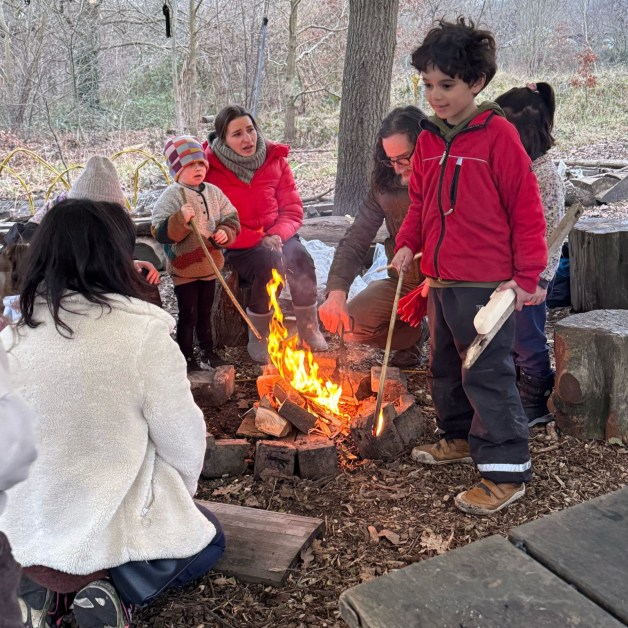
The fire triangle is a simple model used to understand the necessary components for a fire to ignite and sustain itself. The sides represent Heat, Fuel and Oxygen. If a fire or stove isn’t burning well, you may need to consider one of the sides of the triangle.

- Heat – This is the energy source that raises the temperature of a material to its ignition point. Heat can come from various sources, such as a spark, open flame, or friction. If firewood gets damp, or is not fully seasoned it will reduce the heat, as heat energy will be used to boil off the moisture in the timber. This will lead to a fire which smoulders and produces a lot of unhealthy polluting smoke.
- Fuel – Any combustible material that can catch fire, such as wood, parrafin, paper, or gas.
- Oxygen – Oxygen supports combustion, making the fire burn. Typically, the air around us (about 21% oxygen) is sufficient for most fires to thrive.
If any one of these three components is removed, the fire will be extinguished. This is why fire prevention techniques often focus on removing one or more of the elements of the fire triangle.
Heat and Its Role in Combustion
- Ignition Temperature: For a material to catch fire, it needs to reach a certain temperature known as its ignition point or ignition temperature. For wood this temperature is around 250 degrees Celsius. The ignition point is the minimum amount of heat required to start the chemical reaction of combustion. When heat is applied to a fuel, its molecules begin to move faster, eventually reaching a point where they can react with oxygen in the air to sustain a fire.
- Sources of Heat: Heat can come from various sources, including:
- Open flames (e.g. matches, lighters, fire pits)
- Hot surfaces (e.g. stoves, or metal tools left in the sun)
- Sparks (e.g. a ferro rod, flint and steel or pezio)
- Friction (e.g. rubbing two materials together i.e. a bow drill)
- Solar ignition (e.g. Magnifying glass or parabolic reflector)
Fuel’s Role in Combustion
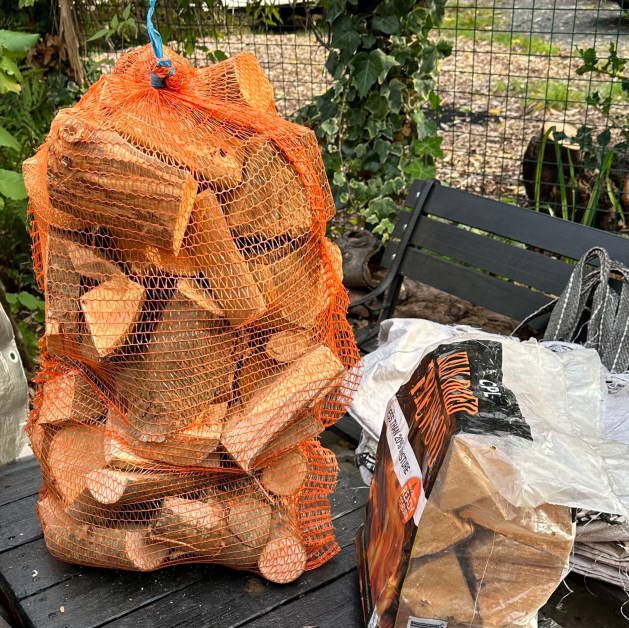
Fuel is the second essential element in the fire triangle. It is any material that can burn and sustain combustion when combined with heat and oxygen. For a fire to start and keep going, there needs to be an adequate supply of fuel.
- Combustible Materials: Fuel can be any substance capable of catching fire, including solids (wood, paper), liquids (eg. paraffin, oil), or gases (propane, butane). The type of fuel determines how easily it ignites and how intensely the fire burns.
- Energy Source: When fuel i.e. firewood, is heated to its ignition temperature, it begins to release energy in the form of heat. This energy fuels the combustion process by reacting with oxygen in the air.
- Fuel and Fire Size: The amount of fuel present influences the size and duration of the fire. More fuel means a bigger and longer-lasting fire. If fuel runs out or is removed, the fire will eventually go out.
Oxygen’s Role in Combustion
Oxygen is the third essential element in the fire triangle. It supports the chemical reaction of combustion, enabling a fire to burn.
- Concentration of Oxygen: The air around us contains about 21% oxygen, which is usually enough to sustain most fires. In an open fire you can increase the oxygen by stacking the firewood in a kind of teepee shape, this allows air (oxygen to circulate). If you pile wood onto the fire it can smother the fire, reducing the amount of oxygen.
- Supports the Chemical Reaction: Oxygen is a key part of the chemical reaction that occurs during combustion. When heat breaks down the fuel, oxygen reacts with the fuel’s molecules, causing them to release energy in the form of heat and light. This reaction is what we see as a fire.
- Role in Fire Behaviour: The presence of oxygen not only allows combustion but also affects the fire’s speed and intensity. A fire in an oxygen-rich environment burns hotter and faster, while a fire in an oxygen-deficient environment may smoulder or be extinguished.
Sustaining a fire
We’ve all observed how placing a glass jar over a candle causes the flame to go out as the oxygen inside is used up, but how do you increase the oxygen when making an open fire?
To increase the oxygen supply in a fire as it burns down, you can stoke the flames with fire tongs or a sturdy stick. Gently shuffle the embers to clear away accumulated ash, exposing the hot coals to more air. Alternatively, reposition the firewood into a triangle shape, allowing more surface area to be exposed to oxygen. At times, a fire may need extra air to help the wood reach its ignition point and catch fire. You can achieve this by gently blowing on the flames or using a blowpipe. With the short burst of added oxygen, the fire will temporarily burn hotter, which may be just what it needs to reignite.
To increase the heat you can shuffle the coals and charred firewood into a smaller space so that the fire is more contained. At Meadow Orchard the storage heater bricks can also be carefully moved to create a smaller, more intense or more focussed fire.
Adding fuel is as simple as just placing more firewood onto the fire, it’s a good idea to position firewood around the edge of fire to pre-heat it and drive off any moisture too. This will help the wood ignite faster rather than just smouldering and producing lots of smoke. If you add too much fuel at once this can actually smother the fire, cool it down and cut off oxygen, a bit like throwing a fire blanket over it.
Precautions
Although cooking on an open fire or in a clay oven can be an enjoyable social and educational experience, it’s important to consider the need for open fires when far more sustainable alternatives are available. An insulated gasifying rocket stove for example produces a fraction of the pollution and micro particulate compared to an open fire and also consumes a tiny fraction of the firewood. Wood is a natural material, but when it’s burned, it produces harmful particulate pollution and noxious gases, if you can smell woodsmoke, you’re already breathing it.
 Meadow Orchard Project
You must be logged in to post a comment.