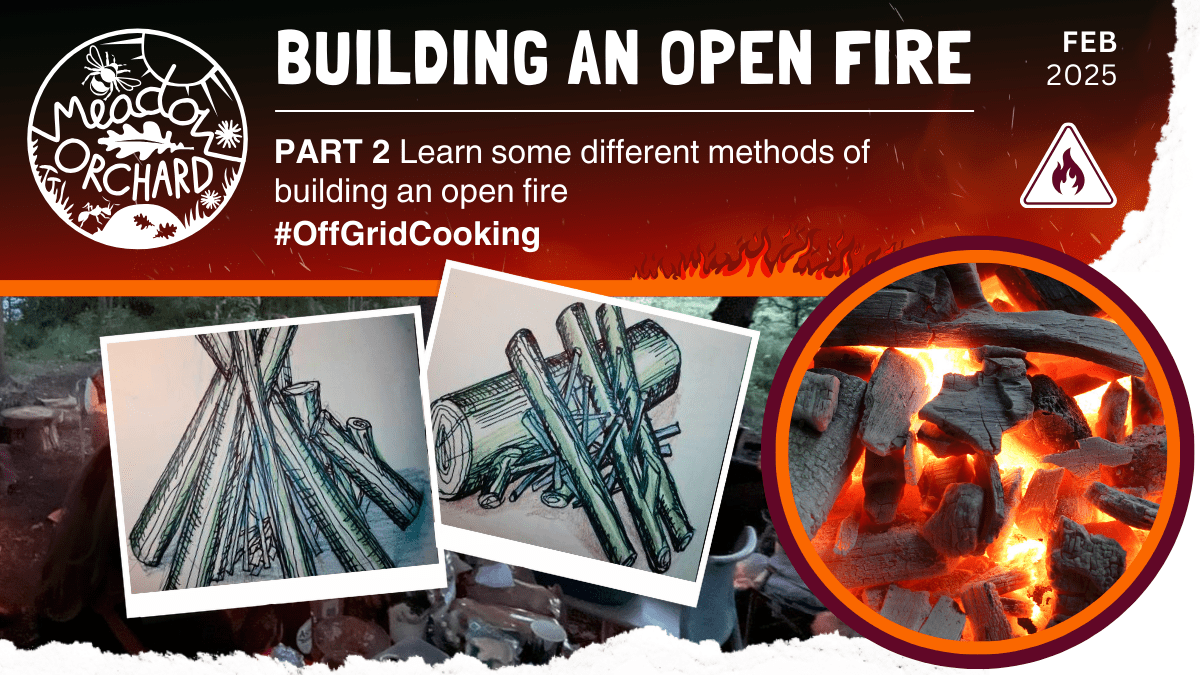
Types of Fire Lay
When laying the fire in our fire pit, there are a number of different methods that you can use. Depending on the weather conditions and type of firewood that you have available some fires are more effective than others.
Building an open fire can be done in several ways, depending on the situation and the materials available. Here are four common methods:
Teepee

The teepee lay is a traditional and efficient method for creating a quick, hot fire.
Best For: A fire that’s easy to start and burns hot quickly, ideal for cooking and keeping warm.
Construction: Begin by placing a small bundle of kindling in the center of your fire pit. Arrange several medium-sized sticks in a circle around the kindling, standing them up and leaning them together at the top, forming a teepee shape. Gradually increase the size of the fuel wood around the circle.
Positioning of Kindling and Fuel: The kindling is placed in the center, with the larger sticks leaning against it. As the kindling catches fire, the logs will gradually burn from the inside out, creating a hot, efficient fire. The teepee structure allows for excellent airflow.
Pyramid

The pyramid fire lay is one of the most popular and traditional methods, providing a steady, controlled burn.
Best For: A well-contained fire, great for warming up, cooking, and when you need a consistent burn for an extended period. Ideal when the ground is damp. Poor in windy conditions.
- Construction: Start with your largest pieces of firewood, arrange the firewood in a layer on the ground. Add another layer of firewood on top of this, but in the opposite direction. Keep adding layers, changing direction as you stack them up. The firewood should get smaller on each layer. Finishing off with a small pyramid of kindling on top.
- Positioning of Kindling and Fuel: The kindling is placed on top, ensuring the fire can get started easily. The larger fuel wood is arranged in layers, allowing for good airflow between the logs. As the fire burns, the pyramid shape will collapse and continue to feed the flames.
Lean-to

The lean-to method is simple and effective, especially in windy conditions. It’s often used when sheltering the fire from the wind is necessary.
Best For: Creating a fire in areas with wind. It’s also convenient for cooking over, as it creates a compact space for focused heat.
- Construction: Start by securing one large log horizontally on the ground. Place the kindling at one side of the log. Then, lean medium-sized fuel logs against the kindling, angling them like a slanted roof over the fire.
- Positioning of Kindling and Fuel: The kindling is positioned at the base of the fire, next to the log. The larger fuel wood is leaned over the kindling, providing coverage and protection from the wind. Air can circulate through the gaps between the logs, feeding the fire.
Log Cabin

The log cabin fire lay is a great method for building a long-lasting, controlled fire. It’s often used for larger fires.
Best For: A slow, controlled burn that can last for hours. It’s good for large campfires where you need a long-lasting flame, ideal for cooking or keeping a group warm. It’s also good for helping to dry out firewood if it’s a little damp.
- Construction: After preparing the kindling in the centre, you begin building a small teepee fire in the centre. Stack larger firewood horizontally like a log cabin, around the teepee. Continue stacking logs in layers, alternating the direction of the logs as you build upward.
- Positioning of Kindling and Fuel: The kindling is placed in the center, ensuring easy ignition. The larger fuel logs are stacked in layers, creating a “log cabin” structure. This formation helps the fire last longer and burn more steadily.
General Tips:
- Kindling: Always use dry, easily combustible materials, like small twigs, leaves, or bark. It’s crucial for starting the fire and getting the larger logs burning.
- Fuel Wood: Use progressively larger pieces of wood as the fire grows. Dry wood burns best, and a mix of sizes ensures a steady and long-lasting fire.
- Airflow: Air circulation is essential for fire. Whether it’s a teepee or log cabin lay, make sure there’s enough space between the logs for air to reach the flames, which keeps the fire burning hot and steady.
Each method has its unique advantages depending on the environment, fuel available, and fire needs. Experimenting with these styles will help you decide which one works best for different activities and weather condition.
 Meadow Orchard Project
You must be logged in to post a comment.