
- How to get involved
- The power of community
- Make a difference
- A Permaculture Project
- What can we compost?
- How to Compost your waste at MOP
- When to go to MOP
- What we do with the compost
At Meadow Orchard Community Garden, something truly special happens behind the scenes — community composting! It’s more than just a sustainable practice; it’s a powerful way for neighbours to come together and make a tangible difference in their local environment.
How to get involved
The process is simple but impactful. Gardeners and community members contribute organic waste—such as fruit and vegetable scraps, leaves, and coffee grounds—to shared composting bins. As the materials decompose, they create nutrient-rich compost that can be used to fertilise the garden, promoting healthy soil and vibrant plant growth.
The power of community
The real magic of MOP’s community composting program lies in its ability to connect people. It provides a space where individuals from all walks of life can work side by side, share knowledge, and contribute to something greater than themselves.
Whether it’s a seasoned gardener teaching a newcomer how to compost or a local family dropping off their kitchen scraps, this program fosters a sense of shared responsibility and pride in taking care of the earth.
Make a difference
The environmental impact is also significant. By composting together, MOP reduces the amount of organic waste that would otherwise end up in landfills, cutting down on greenhouse gas emissions. The compost produced helps enrich the soil, ensuring that the food grown at MOP is healthy and sustainable.
A Permaculture Project
At its core, community composting at MOP is a reflection of the garden’s mission: to build a stronger, more resilient community through shared effort, sustainable practices, and a deep respect for the environment. It’s a small act that, when multiplied by many, has a lasting, positive impact on the planet—and the people who call it home.
What can we compost?
We can compost all vegetable scraps, cooked food waste (no animal products), garden waste, brown cardboard (free from any tape and labels).
How to Compost your waste at MOP
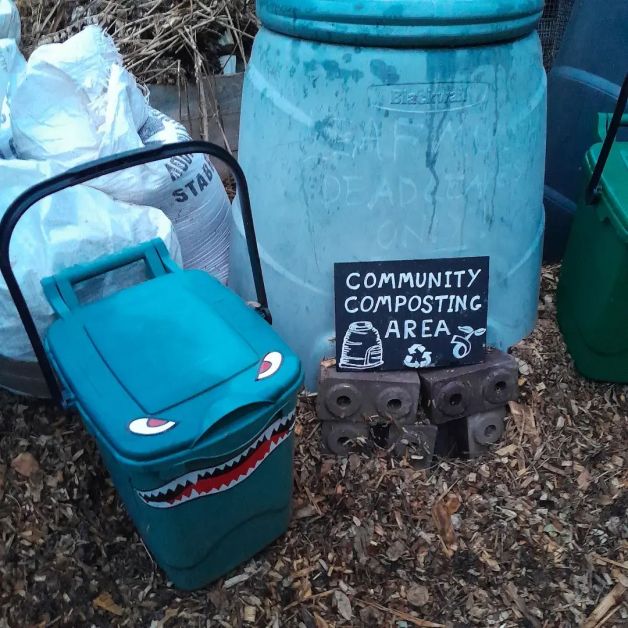
Simply bring along your bokashi bin, a food caddy of kitchen scraps, bags of grass cuttings or garden waste.
Ask one of our volunteers or site leaders to point you to the compost bins. If it’s food scraps, kitchen waste ask where the black compost bins or ‘daleks’ are. Pop in an equal volume of woodchip and you’re good to go!
If it’s garden waste, hedge cuttings, grass cuttings those go in our pallet composting bays, again one of our volunteers will show you where those are.
When to go to MOP
We are open from 12.00 – 4.00pm Saturdays and Wednesdays and the gate will be open. If it’s your first time visiting MOP, you can ring the bell and one of our site leaders will welcome you. We are always happy to help and show visitors our garden space.
What we do with the compost
Our raised beds need organic matter added each year to keep them fertile for growing food. Vegetables take a lot of nutrients from the soil so we need to replace what’s been used during the season. We mulch with a top dressing of rough compost each year. We also use compost for creating new beds, plant sales and as a soil conditioner to regenerate our garden site.
Organic matter is also composted by our worms in our various worm beds, soil feeding stations and wormery containers. We also use the resulting compost and worm casts when preparing potting mixes (adding around 25% by volume)/


 Meadow Orchard Project
You must be logged in to post a comment.