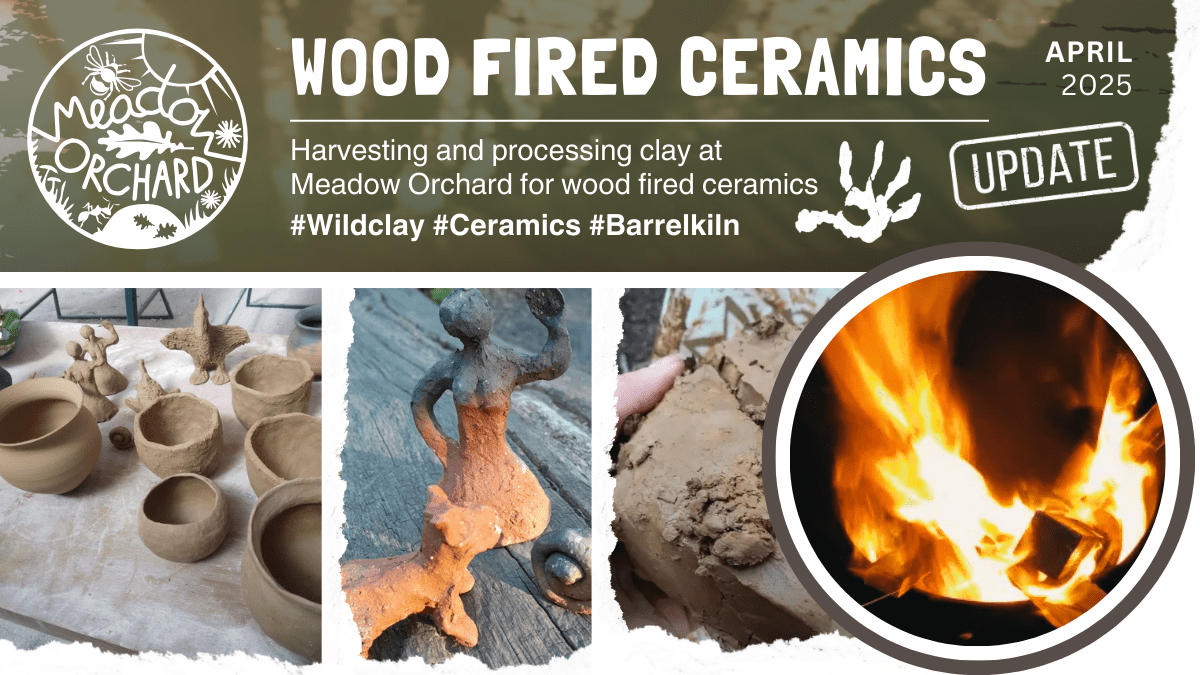
- Ceramics at Meadow Orchard, Why?
- A Connection with Nature
- Barrel firing
- Wood Firing on site
- Our First Test Firing
- Processing our Clay
- Adding Grog to the Clay
- Summary
Ceramics at Meadow Orchard, Why?
Engaging in ceramics can have a surprisingly impact on your overall happiness! It’s a lot of fun! Research indicates that hands-on creative activities can offer a range of mental health benefits. Repetitive motions involved in crafting , being present and the satisfaction of completing small, tangible tasks can help stimulate mood-enhancing chemicals like serotonin and dopamine! For many people, working with clay provides a meditative experience that helps foster mindfulness and emotional stability.
Pottery also connects us with our ancestral roots. For millennia, humans have foraged and collected clay shaping it into practical objects, artwork and decoration. When we immerse our hands in clay today, we are tapping into a deep, evolutionary instinct. It helps align our bodies and minds with how we have interacted with the natural world for thousands of years. Harvesting or foraging our own wild clay further connects us with this fascinating and tactile material and the primitive technology used by our ancestors.
A Connection with Nature
Working with clay nurtures a meaningful relationship with nature and our local geology. Clay is a raw, earthly material that embodies time and the cycles that formed our planet. This connection can be grounding (pun intended) and encourages a greater appreciation and understanding of our environment. Through this creative and playful process, we not only express ourselves but also cultivate a sense of peace and spiritual nourishment.
Simply working with the clay in it’s natural state to sculpt, model and play offers us countless creative opportunities, as we consider what kinds of forms we’d like to create or where we gain our inspiration from in the natural world around us.
Working outdoors, on location in our beautiful natural space offers an experience very much grounded in the natural environment, away from the rather factory like ceramics studio, off grid, raw, without electricity, potters wheels, and thermostat controlled electric kilns. Using local coppice for fuel and the clay beneath our feet.
Barrel firing
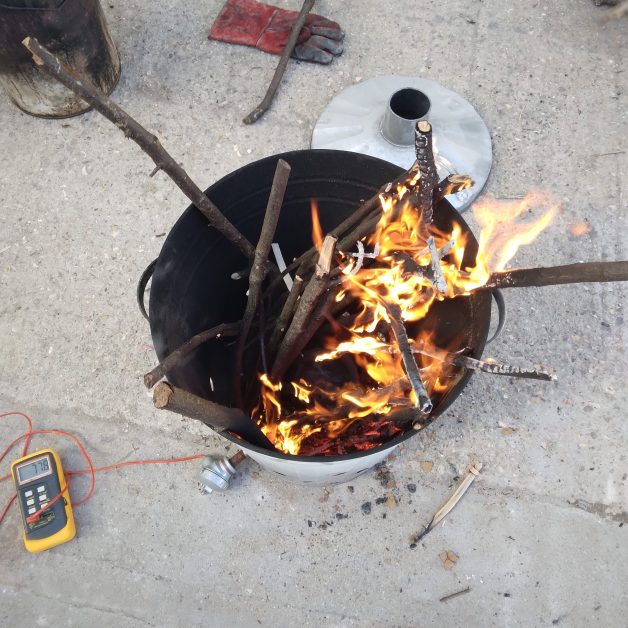
Barrel firing offers a contained, accessible, straightforward entry into wood firing ceramics. With it however are a number of technical issues as we discover the properties of our clay, how best to process it and an understanding of what it is capable of with a minimal need for processing and using largely what we have available on site.
A massive thankyou to our friends Amy and Shem at nearby pottery studios Turning Earth, who have really been amazing, providing us with ongoing technical support and inspiration for this project.

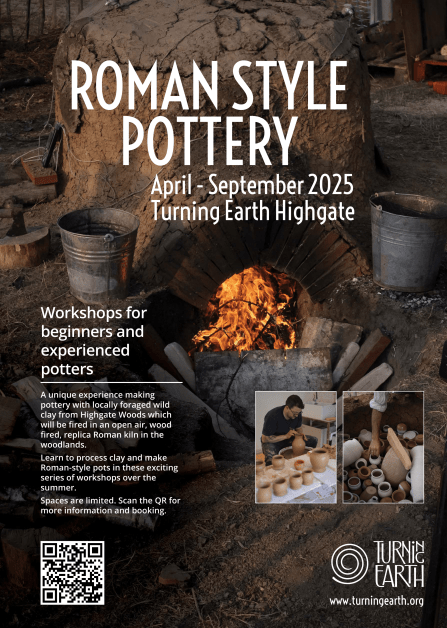
At our recent visit to the Turning Earth studios it’s fascinating to see and hear about the preparations for their next historic kiln firing at the replica Roman kiln in Highgate Wood. It’s really beginning to feel like a living V&A museum with their replica amphors, pots, vessels and historically accurate roman oil lamps!

Coming back down to earth, (pun intended again!) we are still no less excited about our first tentative pottery items made with our own clay.
Having touched on the archaeology and geology from the nearby Highgate Roman Kiln, we’ve really gone down the rabbit hole of ideas and creativity and what if’s.
Meadow Orchard has a history of working with clay onsite, constructing a clay building, oven, rocket stoves. Even our ants are hard at work, excavating clay and building and processing the material to build their anthills. There are so many opportunities for working with this material to sculpt and make, both utilising it in it’s fired and unfired state.
Wood Firing on site
The ability to be able to process our wild clay and fire onsite offers so many possibilities. Somehow the thought of buying commercially processed clay and then popping it in to an electric kiln seems so detached from foraging coppice wood for fuel, digging clay directly out of the ground and firing using woodfire. Much more in-keeping with our permaculture principles, initiating a dialogue and bringing people together with a shared joy of making.
Our First Test Firing
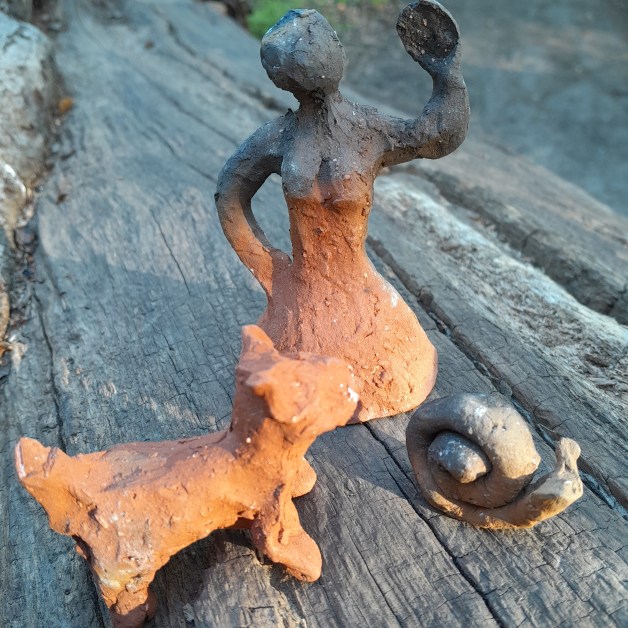
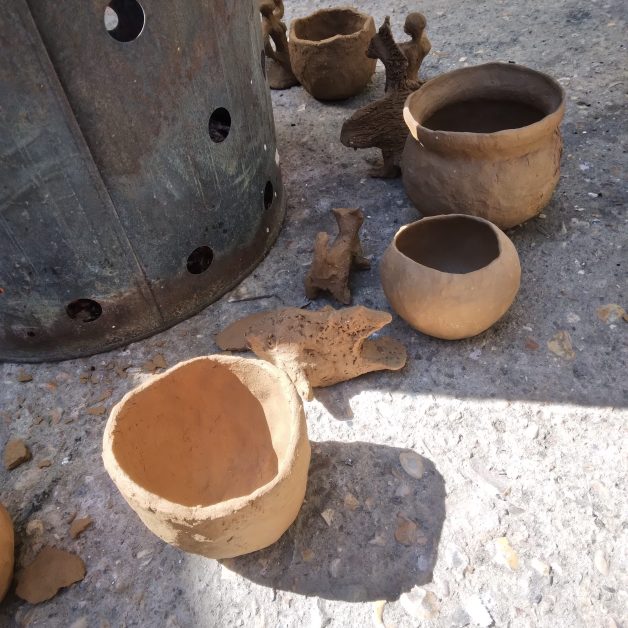
11/4/2025 We carried out the first barrel firing today with our Meadow Orchard clay to get some knowledge of how it responds to the sudden change in temperature in the wood firing. These little figures stood up well to the firing. We’ll try a ring or saggar in the next barrel test firing to help protect the pottery from coming to direct contact with the heat and embers to help reduce breakages during firing. Thanks again to Turning Earth for these suggestions and offering to make and fire this in preparedness for the wood fired barrel kiln at Meadow Orchard!
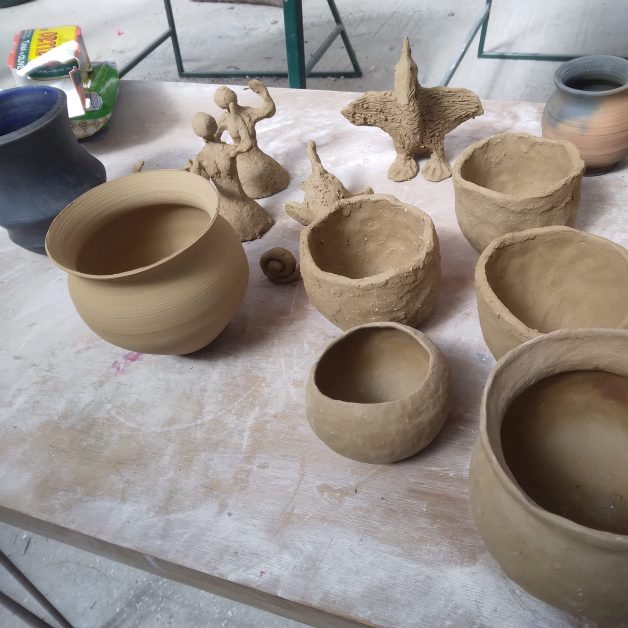
To give the clay a better chance of standing up to the brutal wood firing process test pieces were made using various additions of kiln sand as grog, some examples with calcined flint and some using ground clay from broken pre-fired pots.
At this point we’d never fired our clay before, this was a test firing so we could gain more experience and familiarity with the material and process to ensure a good success rate in future firings. It’s so interesting to see how our clay varies from that in the Roman kiln site in Highgate Wood, despite being so close by!
The learning curve is amazing, delving into our local wild clay. We are just touching the surface on the fascinating history or wood firing in nearby Highgate wood and the incredible replica roman kiln (Which will be fired again this September)


Processing our Clay
16/04/2025 Firstly we dug a small quantity of clay from out of the ground, avoiding anything containing aggregates and organic matter from our topsoil. Adding a little water to make the clay workable, pinching the clay between our fingers to feel for any stones and separate out any roots and organic matter. The clay was very clean and working by hand with a little water soon resulted in a very malleable and homogeneous material, rather like play dough or plasticine. Amy really inspired us with her love of the material and making, the whole activity feeling very accessible and hugely engaging.
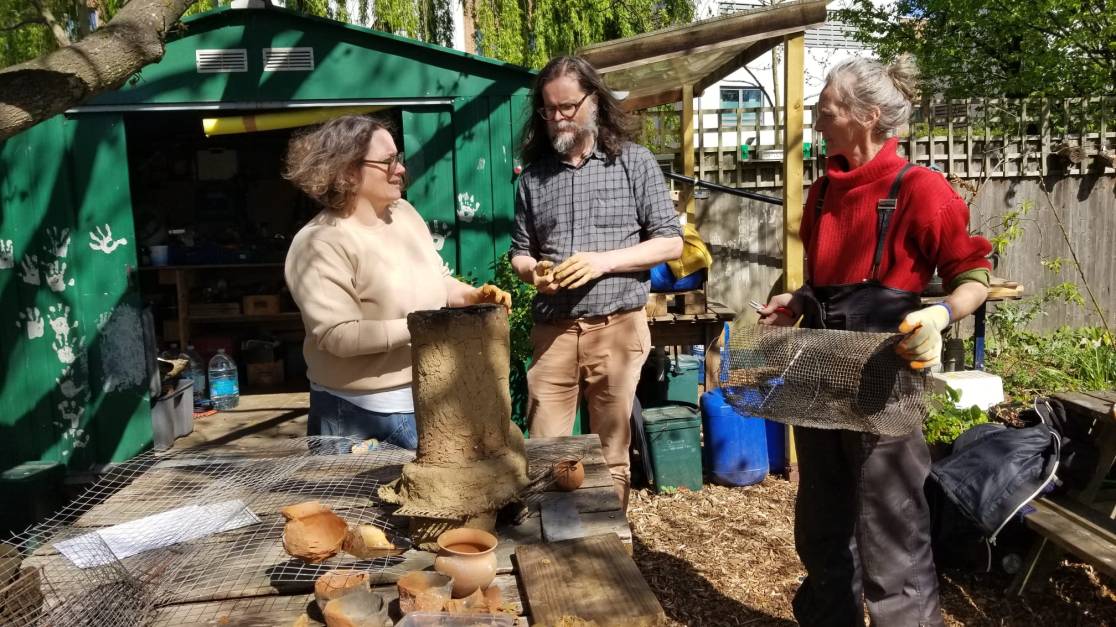
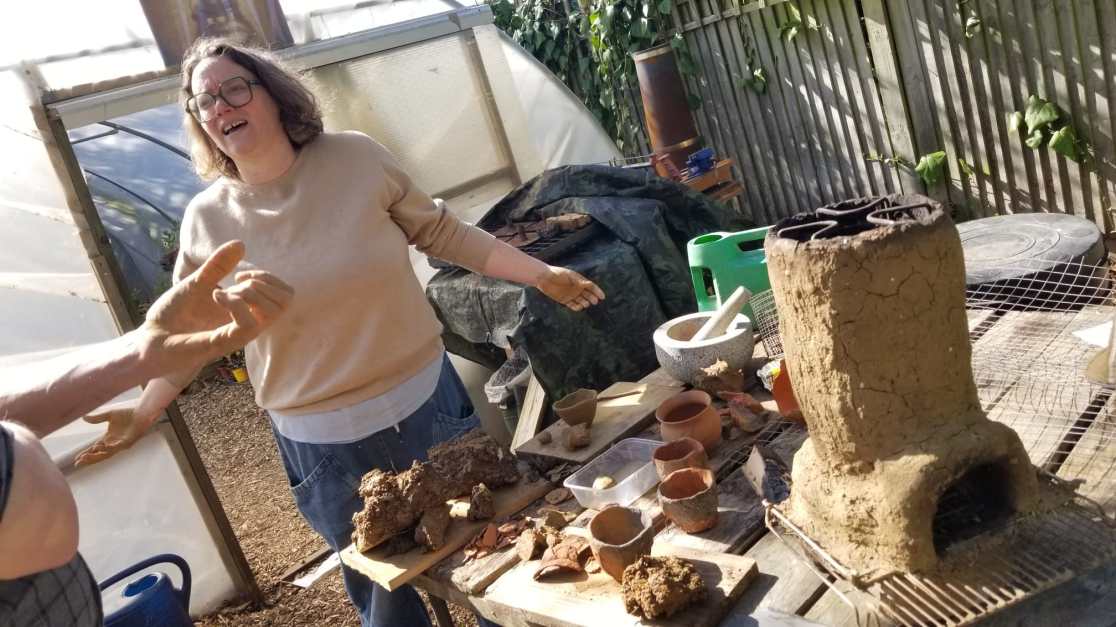
At this stage the clay is very soft and easy to sculpt into whatever weird and wonderful forms we desire. Hand modelling is a playful activity and immensely satisfying and therapeutic too. There is no pressure, if it goes wrong, simply add water and rework! The resulting pieces can also be returned to the earth so it’s an incredibly low impact activity.
Adding Grog to the Clay
Since we already had some of our fired clay from the first test firing, we broke up some of the failed test pieces (items without any grog added) to reuse the clay as an addition to the clay body for subsequent test pieces. We used a small granite pestle and mortar to crush the pieces and ground into a fine powder, before ‘wedging’ into our clay.
Grog changes the feel of the clay when working the material. The small particles of fired clay adding structure and support, the grog also helps allow moisture trapped in the clay to exit without the rapidly expanding water leading to explosions in the kiln and breaking the pots during firing. A handful of the grog was added to a handful of the clay (You can hold a lot less of the fine ground powder in your hand than clay).
Adding even a small quantity of the grog to the clay makes the material immediately firmer and stiffer, rather less workable and it dries out a little quicker in your hand as you model it. The exact ratio of grog varies, depending on what the intended outcome is. For our wood firing we are really going for the primitive side of ceramics, no electricity or potters wheels, making by hand and really gaining insight in what our ancestors did, thousands of years ago.
Summary
We are making significant progress in testing and refining our approach to working with our London Clay. From extracting and processing the clay to conducting initial firings, we’re gaining valuable insights into its behaviour and how it responds to different methods. By adding grog and conducting further tests, we aim to improve the clay’s performance in wood-fired barrel kilns, ensuring better results in future firings. This ongoing experimentation will ultimately help us fine-tune our process, leading to more successful and reliable pottery outcomes.
Working with ceramics onsite is a new experience for us and having a facility for firing pottery and ceramic items at MOP will be a fantastic opportunity to really engage with the creativity, geology and history of ceramics in North London.
Thank you to those individuals and groups that have reached out and registered interest in the upcoming workshops and the potters who have kindly taken the time to help process and offered to test fire our clay. There is a really amazing local community of creatives and we can’t wait to see the outcomes this spring and pave the way for more making and learning at Meadow Orchard.
If you’d like to be kept up to date please send us an email or click the link below.

 Meadow Orchard Project
You must be logged in to post a comment.