
- Bees (e.g. Honeybee)
- Hoverflies (Family: Syrphidae)
- How to Tell Hoverflies and Bees Apart
- Bee v Hoverfly: Quick Tips
- Help Us Identify our Bees
- Solitary Bees at MOP
Often Bees and Hoverflies can look quite similar and it can be hard to tell them apart. Hoverflies don’t have a sting and some species have even evolved to look like Bees, Wasps and Hornets! In nature where a harmless species such as a hoverfly (the mimic) resembles a dangerous species i.e. a bee (the model), this is known as Batesian Mimicry. Sometimes they look so close to the insect that they are trying to mimic they can even fool us!


The hoverfly species Volucella Zonaria, common name Hornet mimic hoverfly is the UK’s largest hoverfly and looks very much like a European hornet. Volucella Bombylans is another hoverfly that has evolved to resemble a Bumblebee and it’s common name is unsurprisingly the Bumblebee mimic hoverfly. Some species of Bee have even evolved to look like wasps, presumably because wasps are often more aggressive and will put off predators!


The below gives a few pointers as to tell them apart, bee or hoverfly they are all great pollinators and all play a vital role in the ecosystem.
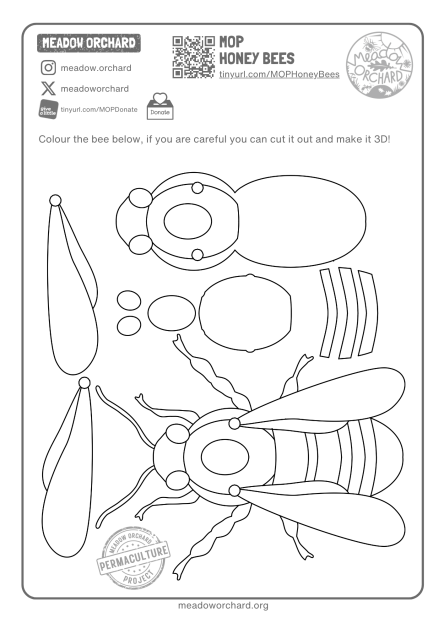
Bees (e.g. Honeybee)
- Complete Metamorphosis:
- Egg → Larva → Pupa → Adult
- Nesting:
- Bees build nests or hives, often in colonies (especially honeybees).
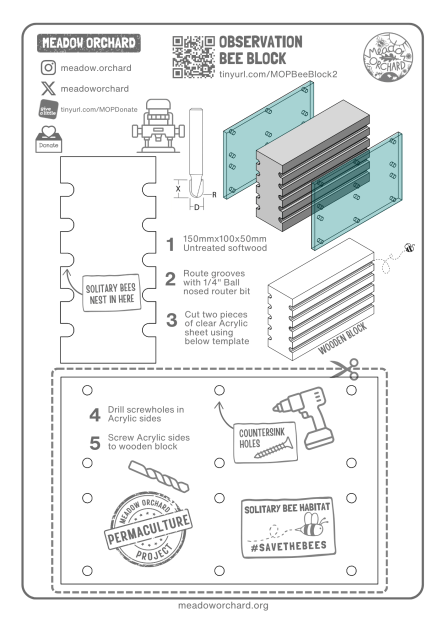
- Solitary bees (like mason or leafcutter bees) create individual nests in wood, soil, or stems or beehotels!
- Larvae:
- Bee larvae are fed by adult bees, often with nectar and pollen (or royal jelly for queen bees) or from a reserve of food collected by the adult bees.
- Pupation:
- Happens inside the nest, in wax cells or chambers.
- Social Structure:
- Many bees (especially honeybees and bumblebees) are social, with queens, workers, and drones.
Hoverflies (Family: Syrphidae)
- Complete Metamorphosis:
- Egg → Larva → Pupa → Adult
- Egg Laying:
- Hoverflies lay eggs in water or on plants, often near aphid colonies or decaying matter, depending on species.
- Larvae:
- No parental care.
- Larvae are often predatory (e.g., they eat aphids), or decomposers, feeding on rotting organic matter.
- Pupation:
- Occurs in soil or vegetation, not in nests.
- Social Structure:
- Solitary—no hives or colonies.
How to Tell Hoverflies and Bees Apart
| Feature | Bee | Hoverfly |
|---|---|---|
| Wings | 2 pairs (4 wings total) | 1 pair (2 wings) |
| Antennae | Long and elbowed | Short and stubby |
| Body Hair | Fuzzy, with branched hairs (pollen collection) | Less hairy or smooth |
| Eyes | Smaller, to the side of the head | Large, often covering most of head |
| Flight Pattern | Buzzing, steady | Darting, hovering in place |
| Legs | Often have pollen baskets | No pollen baskets |
| Coloration | Natural, muted tones, more uniform | Often has bold mimic patterns of yellow and black |
| Behaviour | May sting if threatened | Harmless—no sting |
Bee v Hoverfly: Quick Tips
- If it hovers perfectly in place then zips away: it’s a hoverfly.
- If it’s gathering pollen and looks a bit “busy”: probably a bee.
- If it lands and you see it has 2 wings only, you’ve got a hoverfly.
Help Us Identify our Bees
If you’d like to help us record, observe and build a better picture of the diversity of wildlife on our site, click the link below to find out more about our iNaturalist project.
 Meadow Orchard Project
You must be logged in to post a comment.