Appreciating the amazing biodiversity and wonder of nature on our site
As winter gives way to spring, the land is quietly waking up at last. It may look quiet but life has been working, out of sight, all winter long.
Beneath the soil, Yellow Meadow Ant (Lasius flavus) colonies are already active. Workers are repairing tunnels, tending and “milking” their aphid herds, and carefully regulating temperature deep within the nest. These ants are vital soil engineers, improving drainage, aeration, and biodiversity over decades. Ant hills may be lost due to removal, trampling, waterlogging, and overshading. To protect these locally significant and much-loved ant mounds we can clear back small patches of bare earth at the edges of viable territory, giving Queens a head start when they take their nuptial flights later in the summer.
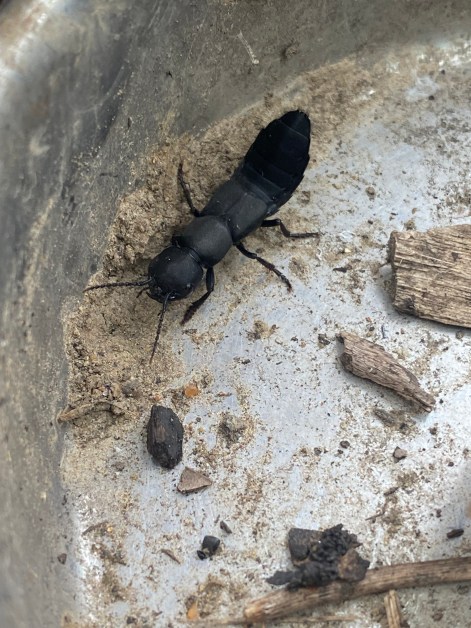
In the leaf litter and log piles, devil’s coach horse beetles (Ocypus olens) and harvestmen (Opiliones) are beginning to stir on milder days.
This is also an excellent time to spot slime moulds on damp logs, woodchip, and decomposing leaves. Most are currently in their plasmodium phase, slowly gliding through microhabitats and feeding on bacteria and fungal spores, returning nutrients to the soil. After rain, they may suddenly appear in fruiting form as tiny sculptural blobs or nets in yellows, creams, pinks, browns or greys, often lasting just a few days.
Frogs and newts will be coming out of hiding shortly to breed in the gratifyingly topped-up pond so look out for egg s and spawn.
Early bumblebees will be seen soon rummaging around for early nectar and searching for nesting sites, often in old mouse burrows or tussocky grass. If you spot a nest, send us an email and we can put a gentle barrier in place to protect it from footfall.
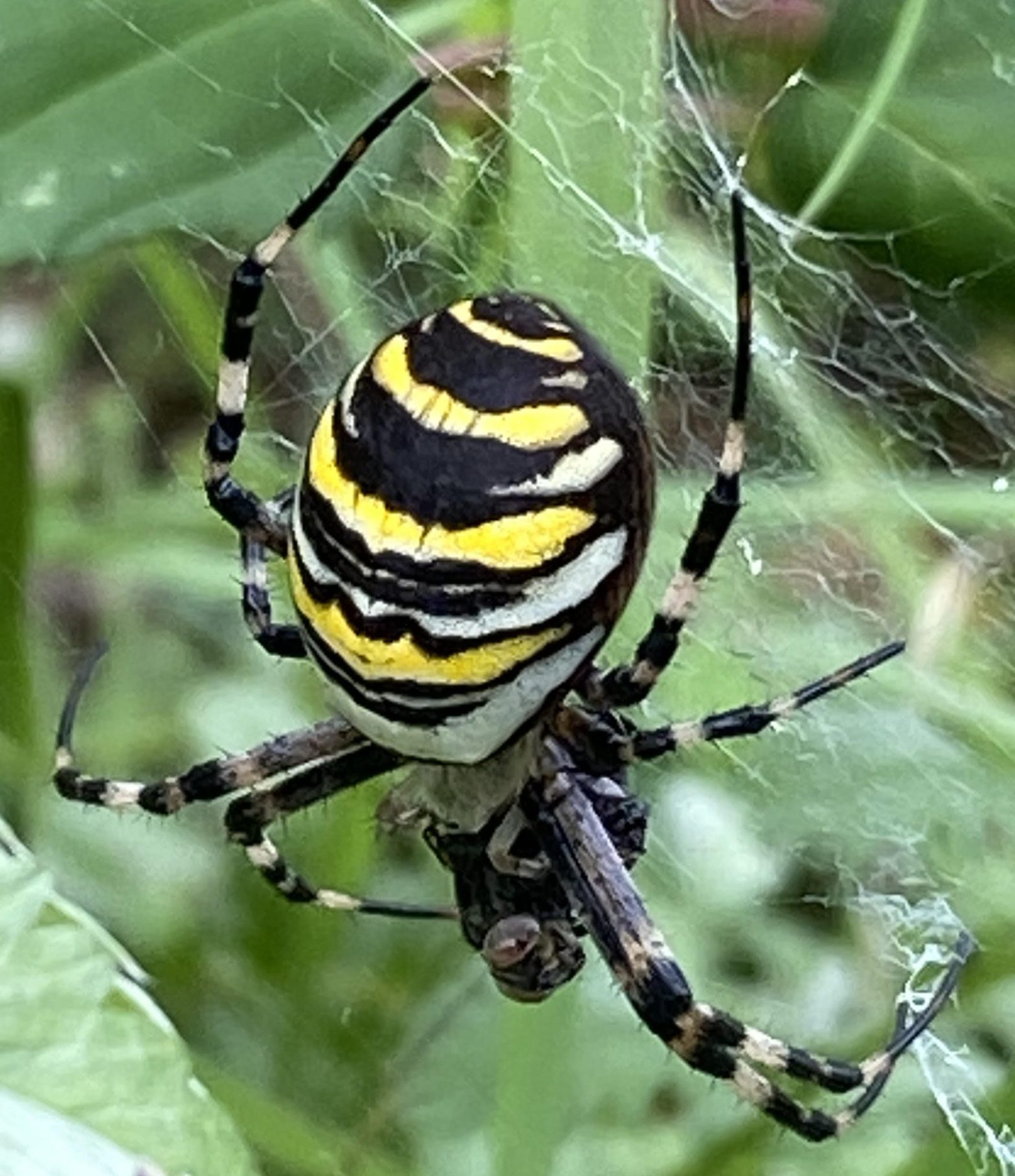
While our wasp spiders (Argiope bruennichi) won’t be visible above ground for some time, their egg sacs are safely hidden in rough grass, waiting for warmth. Cinnabar moth pupae (Tyria jacobaeae) are also nestled close to the surface near the yellow flowered Ragwort plants. They feed on Ragwort exclusively as caterpillars and by ingesting toxins from Ragwort these moths become poisonous. Well-spaced stands of ragwort will support healthy populations.
Spring management decisions directly affect whether young will thrive later in the year. So stay messy: dont tidy, leave leaf piles, let tall grasses and standing dead stems stay in place.
Across the site, plants, trees, fungi, birds, mammals, inverts, amphibians and humans are all responding to new seasonal shifts. Join us if you’d like to take part in biodiversity monitoring, wildlife observation and hands-on land management.
 Meadow Orchard Project
You must be logged in to post a comment.