
Often Bees and Hoverflies can look quite similar and it can be hard to tell them apart. Hoverflies don’t have a sting and some species have even evolved to look like Bees, Wasps and Hornets! In nature where a harmless species such as a hoverfly (the mimic) resembles a dangerous species i.e. a bee (theContinue reading “Lifecycle Differences: Bee v Hoverfly”
Tag Archives: insects
European Orchard Bees Nesting at MOP
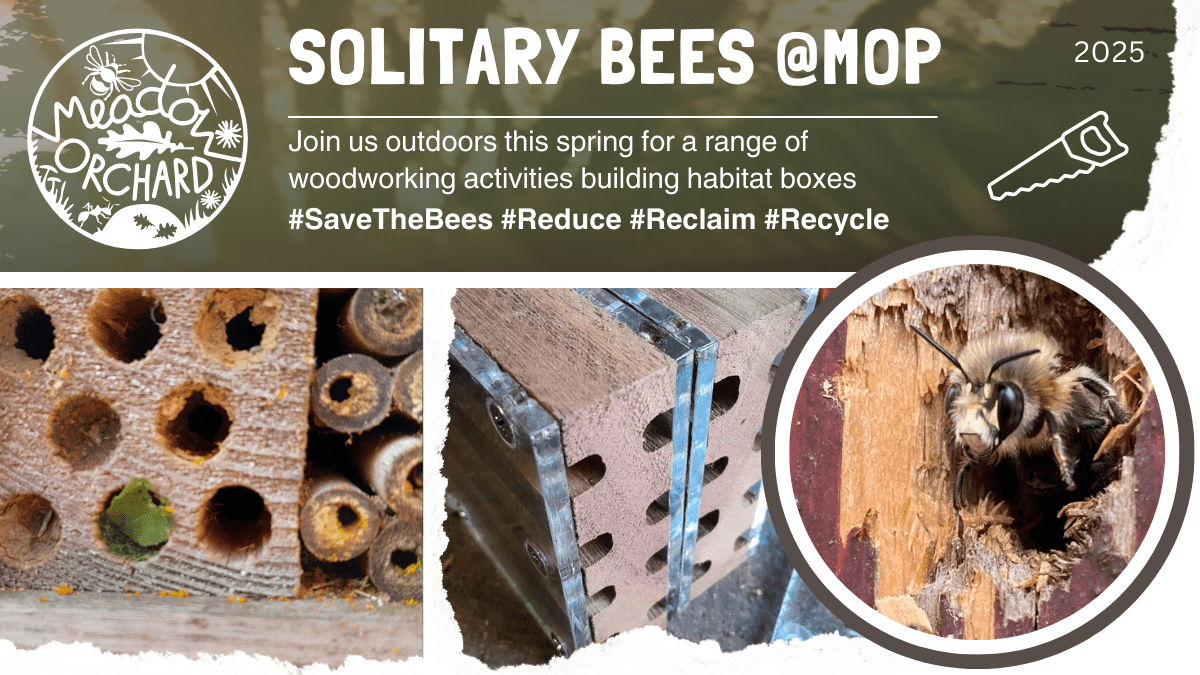
Solitary Bees Our volunteers have been delighted to see a European Orchard Bee nesting in the habitat wall we installed on the side of our green metal tool shed last year. But what exactly are solitary bees and are they different from honeybees? When it comes to locating bee habitat, they pretty much like theContinue reading “European Orchard Bees Nesting at MOP”
Homes for Solitary Bees
Solitary Bees and How to Create Habitat for Them
Did you know there are around 250 species of solitary bees in the UK? Unlike honeybees, solitary bees do not produce honey but play a crucial role in pollination. These fascinating bees build nests in hollow plant stems or small cracks in trees, laying eggs and providing food for their larvae. You can support solitary bee populations by creating ideal habitats, such as bundles of hollow reeds, bamboo, or drilled logs, placed in sheltered, sunny spots. By setting up these bee hotels or bug houses, you’ll encourage solitary bees to nest, enhancing your garden’s biodiversity. Learn more about how to build a bee-friendly environment and attract these essential pollinators!
 Meadow Orchard Project